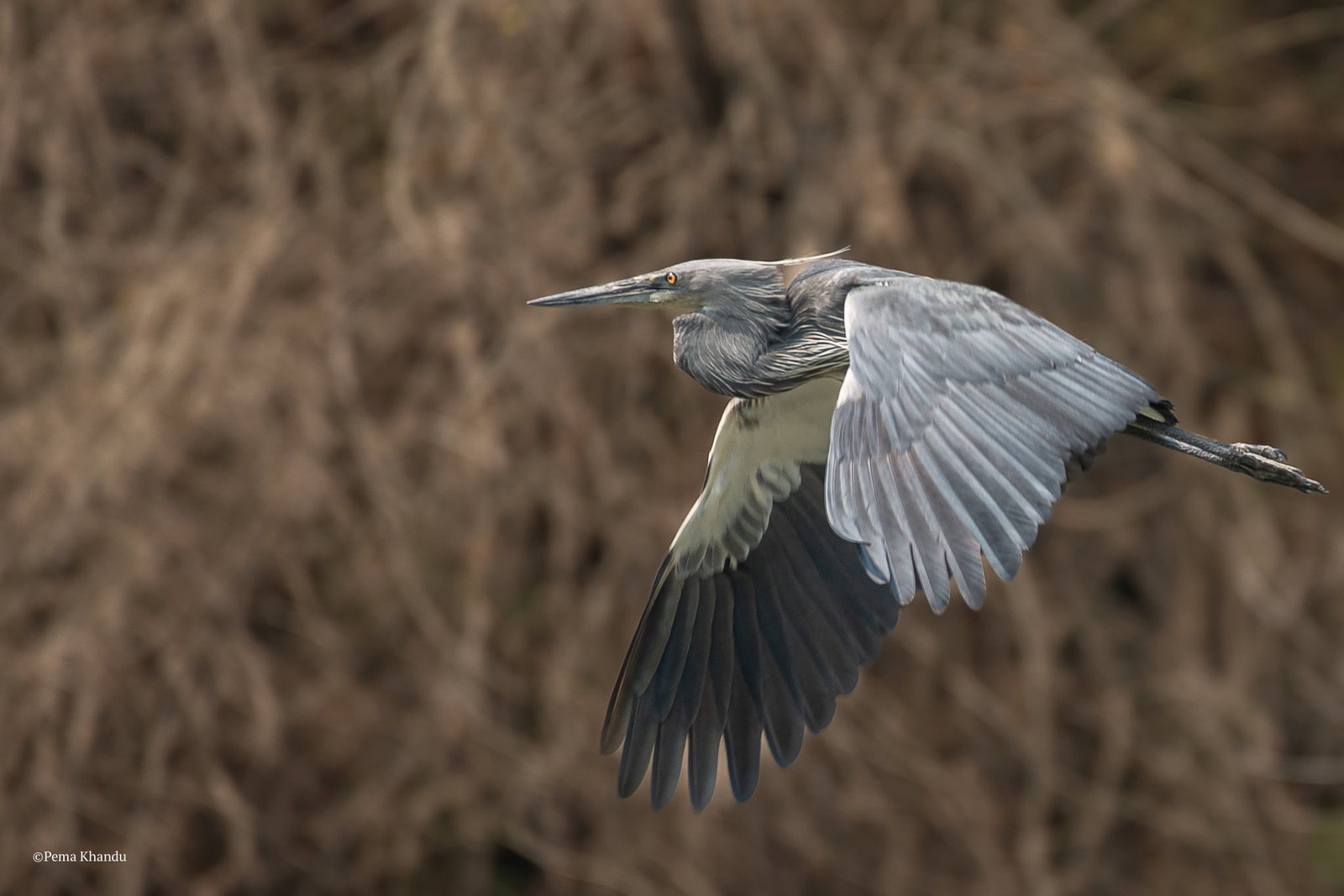
When Pema Khandu first started searching for the white-bellied heron in Bhutan, he spent nearly a month in the field without seeing a single bird.
At one point, he even considered changing his research species altogether.
Then, finally, he spotted one, and his commitment to saving the world’s rarest heron species was solidified.
Today, Pema is a PhD researcher at Texas State University and a member of the White-bellied Heron Working Group under the IUCN (International Union for Conservation of Nature and Natural Resources).
Regarded as one of the world’s most threatened bird species with an IUCN classification of ‘Critically Endangered’, there are believed to be only around 60 white-bellied heron (Ardea insignis) birds over the extent of 165,000 km² of Himalayan freshwater ecosystems, spanning the countries of Bhutan, India, Bangladesh, Myanmar, and China. It has been declared regionally extinct in Nepal and is possibly also extinct in Bangladesh. Bhutan is home to 45% of the global population, including between three and five active breeding pairs, which are vital for the survival and recovery of the species.
The white-bellied heron conservation effort in Bhutan is supported by decades of work from Royal Society for Protection of Nature (RSPN) and its partners, including habitat protection, a captive breeding center in Tsirang, and community engagement initiatives designed to support both livelihoods and long-term conservation goals, such as fishing ponds and irrigation channels for farmers.
White-bellied herons are also considered to be an environmental sensor: their presence indicates the health of the Himalayan freshwater ecosystem, including the fish population, water quality, health of freshwater biodiversity, pollution and other disturbances.
“They are our natural wealth, our pride, and our heritage,” states the RSPN. “The tiny population size, restricted distribution range and small gene pool, despite conservation efforts, indicates our environment is deteriorating and certain food chains are breaking apart.”
With so few birds remaining, every piece of information about the species matters. That includes something surprisingly difficult to determine: whether a bird is male or female.
“For the critically endangered white-bellied heron, this is especially important,” Pema explained. “Males and females are visually indistinguishable, and only genetic methods can reliably determine sex, crucial for identifying potential breeding pairs and supporting conservation efforts.”
Faster decisions, local capacity
Not only does information gathered in the field support more informed breeding decisions. it can also support wildlife conservation practitioners with disease surveillance, population genetics, species identification, and biodiversity monitoring, Pema said.
“Having these capabilities available in the field can make conservation efforts more efficient and impactful,” he added.
For conservation projects working in remote environments, the ability to carry out DNA extraction, PCR, and visualisation locally can fundamentally change how research is conducted.
Traditionally, genetic sexing samples would need to be shipped internationally for analysis, introducing delays, costs, and logistical complexity. Sample degradation can also be a serious concern when your research takes place a six-hour drive from the nearest lab and field work stretches from weeks to months.
With portable tools like the Bento Lab, genetic sexing and eDNA analyses can be carried out within just a few hours, bringing science closer to the landscapes and species we aim to conserve.
Pema first came across the Bento Lab while reviewing literature for his research proposal and searching for tools that could realistically work in Bhutan’s remote field conditions.
“I was intrigued by people using portable equipment such as Bento Lab,” he said. “I was really interested in how this could be the right kind of equipment given the landscape remoteness of doing field work in Bhutan.”
After months spent organizing permits, importing reagents, and navigating logistics, the team successfully brought the system into Bhutan for what may have been the country’s first use of Bento Lab in conservation fieldwork.
Using feather samples and CHD1 primers, Pema and collaborators carried out genetic sexing directly at the Tsirang captive breeding centre, avoiding the need to ship samples abroad for analysis.
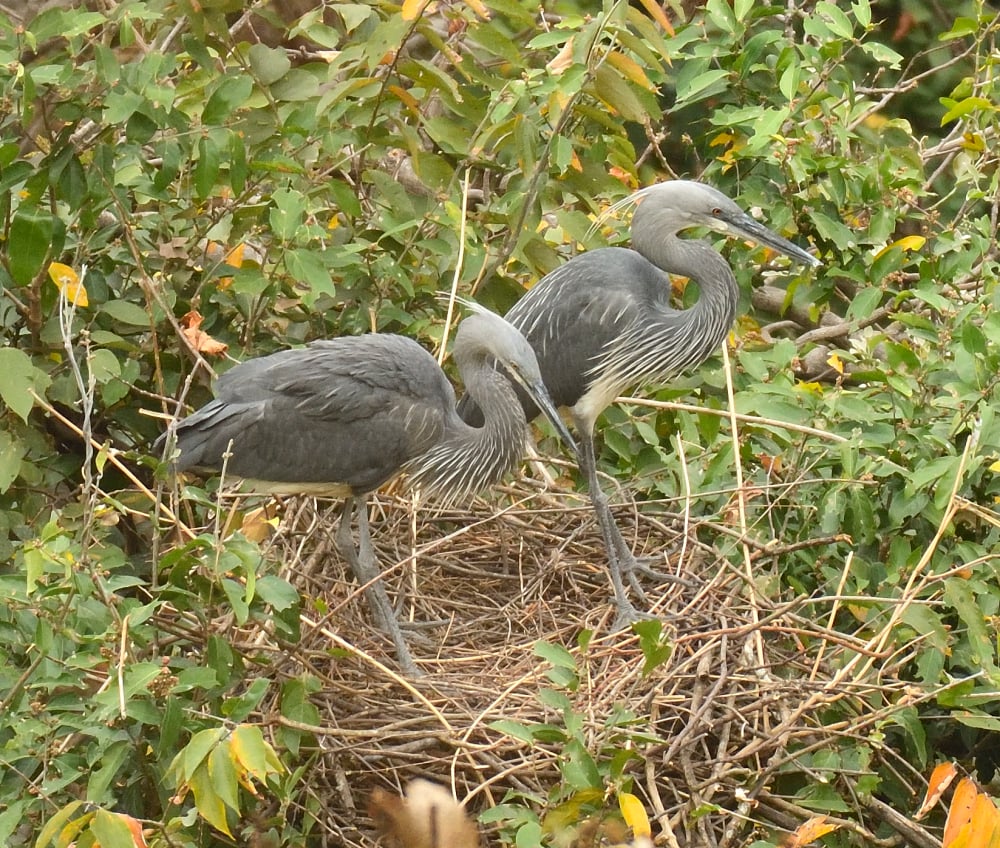
“This time, we could quickly determine the sex of five juveniles in the captive breeding center without sending the samples away,” he said. “It was good to be able to bring the testing to their doorstep, conserve time and resources, and help provide them with skills.”
These juveniles will help establish new founder populations from the captive breeds. As they turn sexually mature (probably between 1-2 years old) they will be paired with a suitable partner from an unrelated population in order to reduce the ‘founder effect,’ which can result in low genetic variations.
Pema said he was impressed not only by the equipment’s utility in the field, but the scientific rigor of the results it produced, which were equal to the equipment in the station lab.
“I think Bento Lab even outperformed the station lab in terms of its volume, its resources, and being able to provide results in a fast and accurate, valid manner,” he said. “It has so much utility for researchers, for educators, and for even citizens who’d like to try on their own and to explore their interest in doing science.”
From the classroom to the field
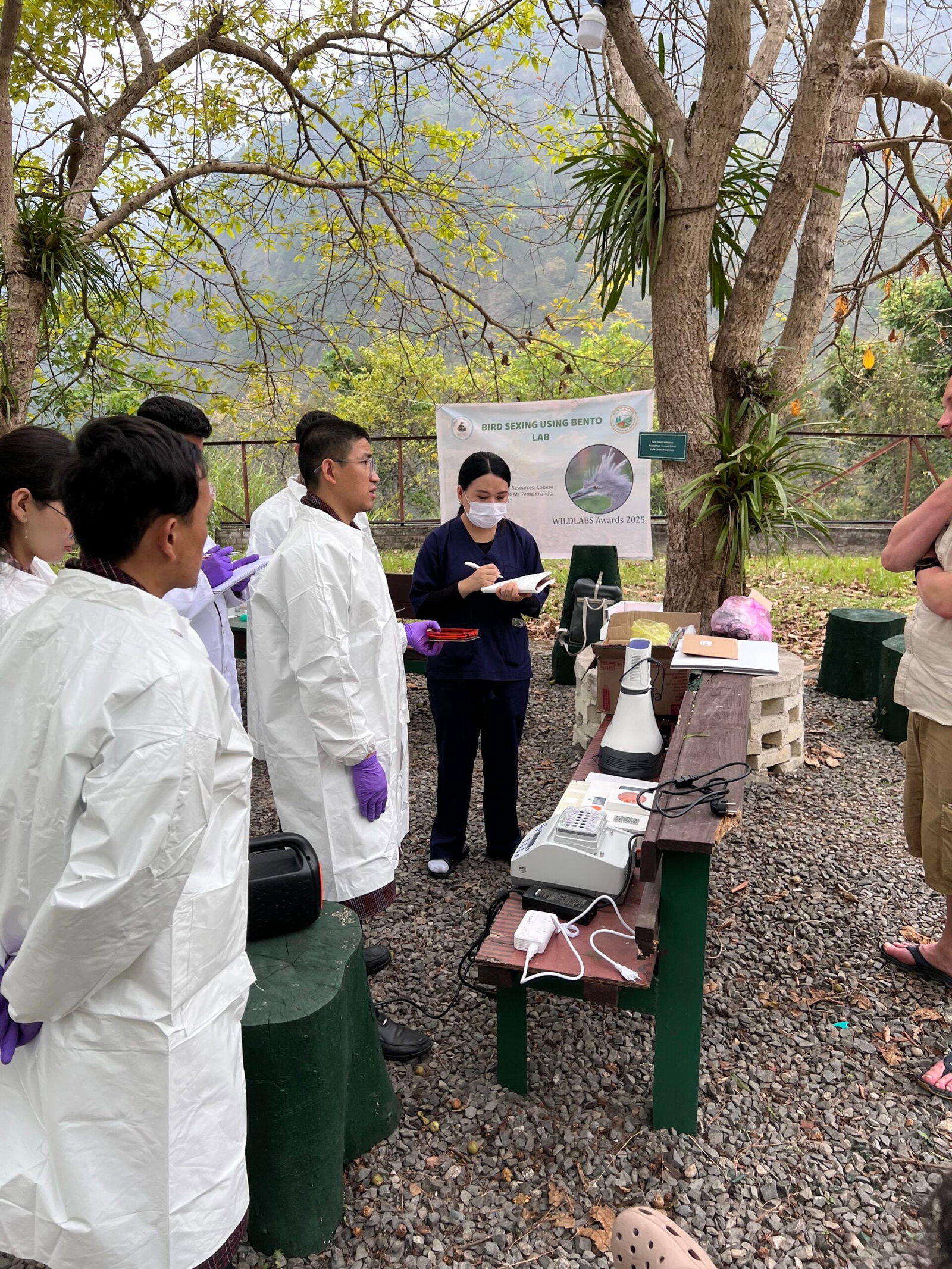
Bird sexing workshop on site in Bhutan.
Before becoming a conservation researcher, Pema was a biology and environmental science teacher in Bhutan.
He regularly took students on multi-day field trips into remote forests and river valleys, introducing them to birds, plants, and wildlife through hands-on experiences rather than just textbooks.
“I was really into experiential learning,” he said. “We need to really engage our younger minds through giving them practical experiences, being outdoors, and having them see by their own eyes and feel by their own hands.”
That teaching background still shapes how he approaches science today.
During his research project, Pema brought together stakeholders from the RSPN, faculty members from the College of Natural Resources at the Royal University of Bhutan, and biotechnology students for a workshop about applying molecular biology tools within conservation and agriculture.
The portability of the Bento Lab system quickly sparked wider interest.
Faculty members at the College of Natural Resources began discussing how they could use Bento Lab not only for research, but also for classroom teaching and community outreach.
Science powered by people
Alongside the genetics work, Pema’s research also focuses on habitat suitability, nest predation, and environmental DNA analysis to better understand and protect remaining white-bellied heron populations.
The conservation efforts in Bhutan are also deeply rooted in human work.
The Bhutanese people tend to have great respect for the environment, and many consider herons to be sacred, Pema said. However, there have been issues in the past with illegal fishing and the occasional hunting of herons. Hydropower construction, riverbed dams, mining, and other development activity has also contributed to habitat loss, degradation, and fragmentation.
Pema includes community outreach efforts as a vital part of his research activities.
“We need further engagement of local communities to help them understand the importance of conserving this species and how to support them,” he said. “No matter how advanced the technology becomes, it is the grit, patience, and collaboration of people that truly drive things forward.”
Looking ahead
Pema hopes to do hands-on Bento Lab demonstrations for foresters, farmers, and other curious community members, as well as additional research into migration ecology and determining the herons’ home range size.
As biodiversity monitoring and conservation genetics continue moving closer to the field, projects like this highlight how portable molecular biology can help make advanced scientific workflows more accessible in remote and resource-limited environments.
For Bhutan’s white-bellied herons, that accessibility may help support faster decisions, stronger local capacity, and better-informed conservation strategies for one of the world’s rarest birds.
“Thank you so much Bento Lab for coming up with such incredible equipment that makes our work interesting as well as much easier,” Pema said. “I’m very, very grateful to Bento Lab for having this kind of instrument accessible to us.”
He also credits the support of collaborators at the College of Natural Resources, particularly molecular biology expertise provided by local researchers and mentors, his advisor and dissertation committee, and funders, including the Rufford Foundation, Texas State University, the WILDLABS Awards/Boring fund, and the WWF, who provided him with a Russell E. Train Education for Nature Program (EFN) Fellowship.