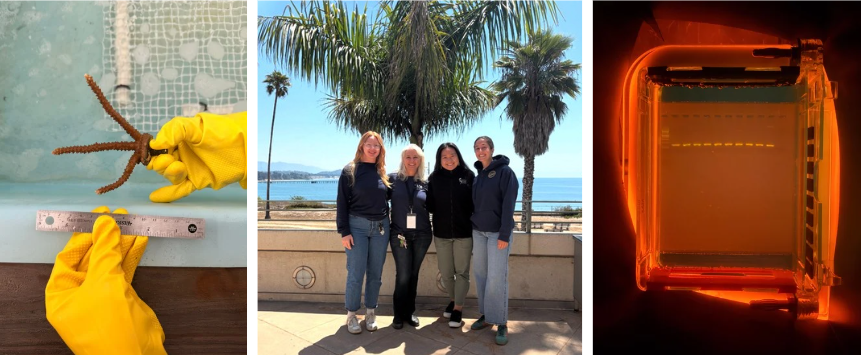
Fieldwork rarely goes exactly to plan. For Sunni Patton from the Vega Thurber Lab at the University of California, Santa Barbara, that unpredictability became a defining part of her recent research trip.
Working in the Florida Keys, Sunni set out to investigate how a bacteria called Aquarickettsia rohweri is transmitted. This bacteria is found to be overwhelmingly dominant in Caribbean staghorn coral in Florida and is associated with disease susceptibility (Klinges et al., 2020).
Aquarickettsia is thought to siphon energy from the coral, which negatively impacts coral health in the face of disease and environmental stress events. Although this bacteria is dominant in the microbiome, it isn’t always there as it is not passed down from parent to offspring during sexual reproduction (Baker et al., 2022). Instead, it must be acquired from the environment, or through a vector, at some point throughout coral development. Therefore, understanding how this bacteria spreads could help inform conservation strategies for this critically endangered coral.
Sunni was originally planning to utilize young corals without Aquarickettsia rohweri, to investigate waterborne and vector borne routes of transmission – specifically using the coral-eating snails Coralliaphila abbreviata which have previously been identified as vectors of coral disease in Caribbean staghorn coral (Gignoux-Wolfsohn, Marks & Vollmer, 2012).
But once in the field, the data told a different story.
“Once I got to the field and tested the samples, the bacteria was already present in all of them,” Sunni explains. “That meant I had to pivot.”
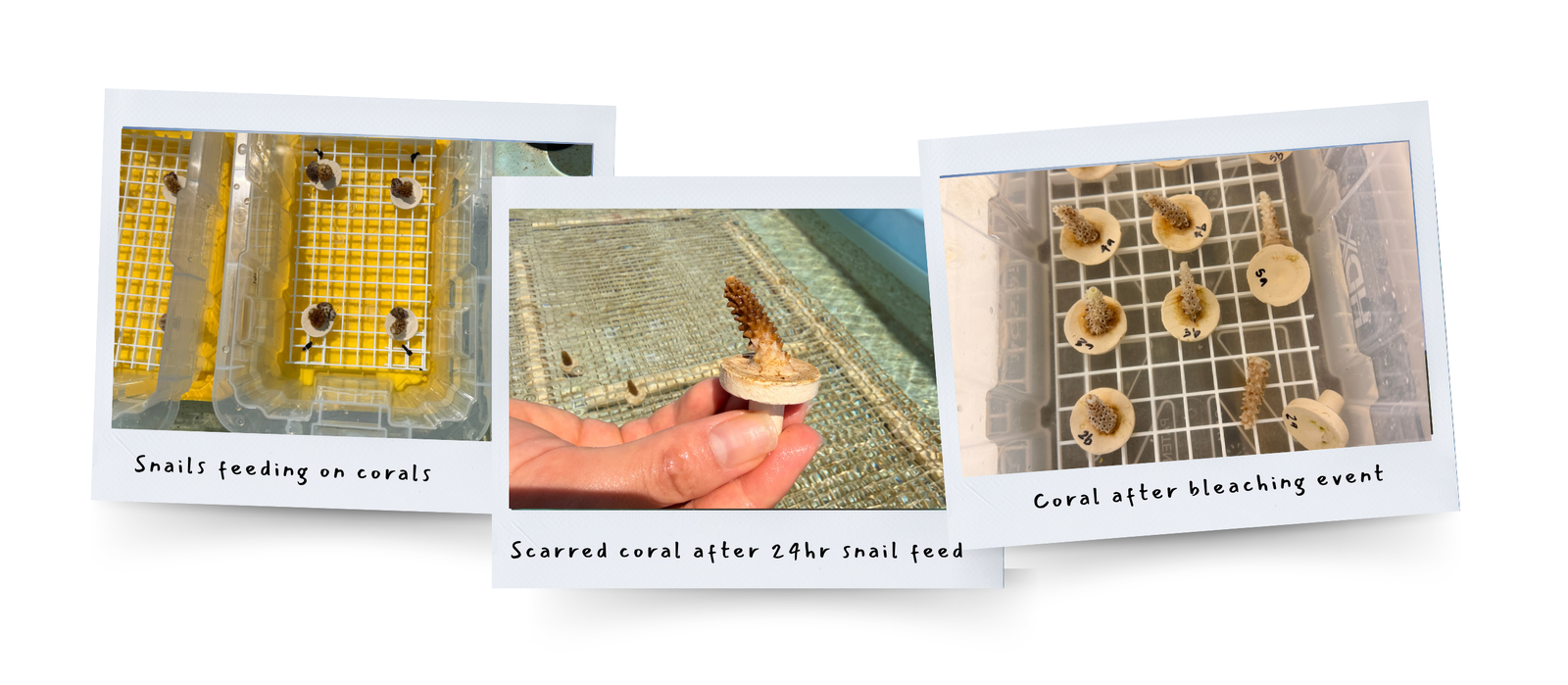
Instead of testing transmission to naive corals, the focus shifted to tracking the bacteria in the surrounding environment. It is known that Aquarickettsia is lost from the microbiome during bleaching – when corals lose their algal partners during thermal stress events – but could it be detected in the water after bleaching events? And if so, for how long? Or could Aquarickettsia cells remain viable after ingestion and excretion by the coral-eating snails?
Answering those questions required fast feedback. Traditionally, that would mean collecting samples and waiting days or weeks to analyse them back in a lab.
Using Bento Lab, Sunni was able to extract DNA, run PCR, and visualise results directly in the field.
“It was really nice to be able to get immediate answers,” she says. “I could decide how long to extend my experiment, or whether to change direction entirely.”
That shift had practical benefits:
- Experiments could be adjusted in real time
- Reagents and samples were used more efficiently
- Time in the field was used more effectively
For a project already underway, this made a significant difference. Rather than returning with uncertain data, Sunni could actively shape the direction of her research as it unfolded.
Bringing the lab to the field
The Vega Thurber lab often uses external lab facilities when conducting field work, but that wasn’t available in this case.
“We conducted this work somewhere that had almost no molecular equipment, so we had to bring everything,” Sunni said. “I didn’t even know we had one. My advisor just pulled it off the shelf and I was like, ‘my god.’”
Despite initial skepticism about its size, Bento Lab quickly proved its value. The compact setup enabled the team to run molecular workflows in locations where this would not usually be possible, shortening the gap between collection and insight.
Sunni was particularly taken with the results of the gel imaging.
“I’ve been struggling with my gel imaging lately, where we just have not been getting beautiful bands. But on the Bento, I think it was the most beautiful gel I have ever gotten, which was really nice.”
A tool for targeted questions
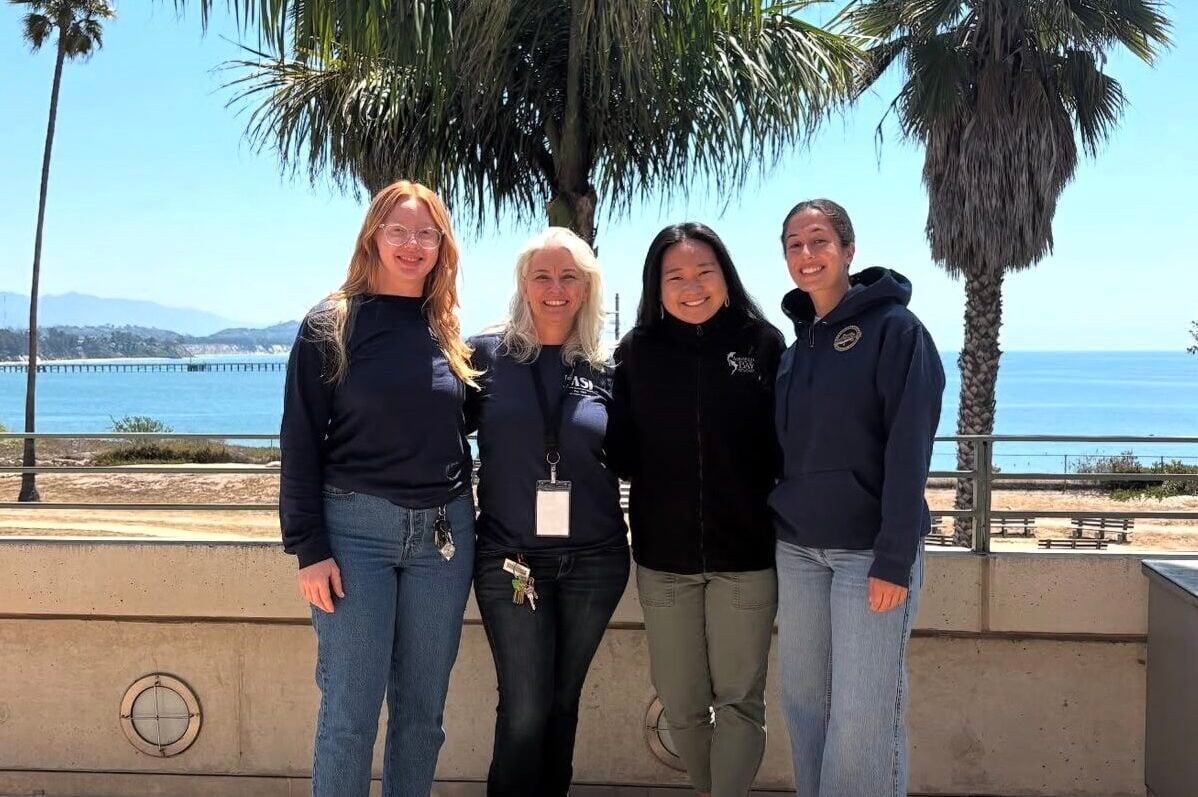
From left to right: Sunni Patton (5th-year PhD candidate), Dr. Rebecca Vega Thurber, Mackenzie Kawahara (4th-year PhD candidate), and Sibelle O’Donnell (2nd-year PhD Student)
In Sunni’s lab, PCR is often just one step in a larger sequencing workflow. But in the field, it became the central tool for answering a specific question: is the bacteria present or not?
“For broader sequencing, it might not always be the best use,” she explains. “But for monitoring, where you know what you’re looking for, it’s perfect.”
By focusing on detection rather than full analysis, the team could:
- quickly validate hypotheses
- avoid unnecessary downstream processing
- prioritise the most relevant samples
In the lab’s Mo’orea outpost, the Bento Lab has served other uses as well.
There, it is used to test protocols, validate primers, and support smaller-scale experiments before taking them on site.
Sunni now hopes to take the Bento into the classroom as part of the STEM workshops and marine biology camps she helps run. Coming from a background without early exposure to marine science, she embraces the opportunity to provide hands-on experiences as a way to open doors for others.
“I think it would be great for student groups, they would really enjoy it. We were all amazed by it,” Sunni said.
Her lab is also passionate about sharing their science, using platforms like Instagram to document fieldwork and make marine research more visible and accessible to wider audiences.
Follow @vegathurber_lab for behind-the-scenes looks at marine research in action, including this fun reel documenting Sunni’s work with the Bento. You can also find out more about the Vega Thurber Lab at this website.
Explore more
Want to see how others are using Bento Lab in the field?
Explore more stories or get in touch to share your own.