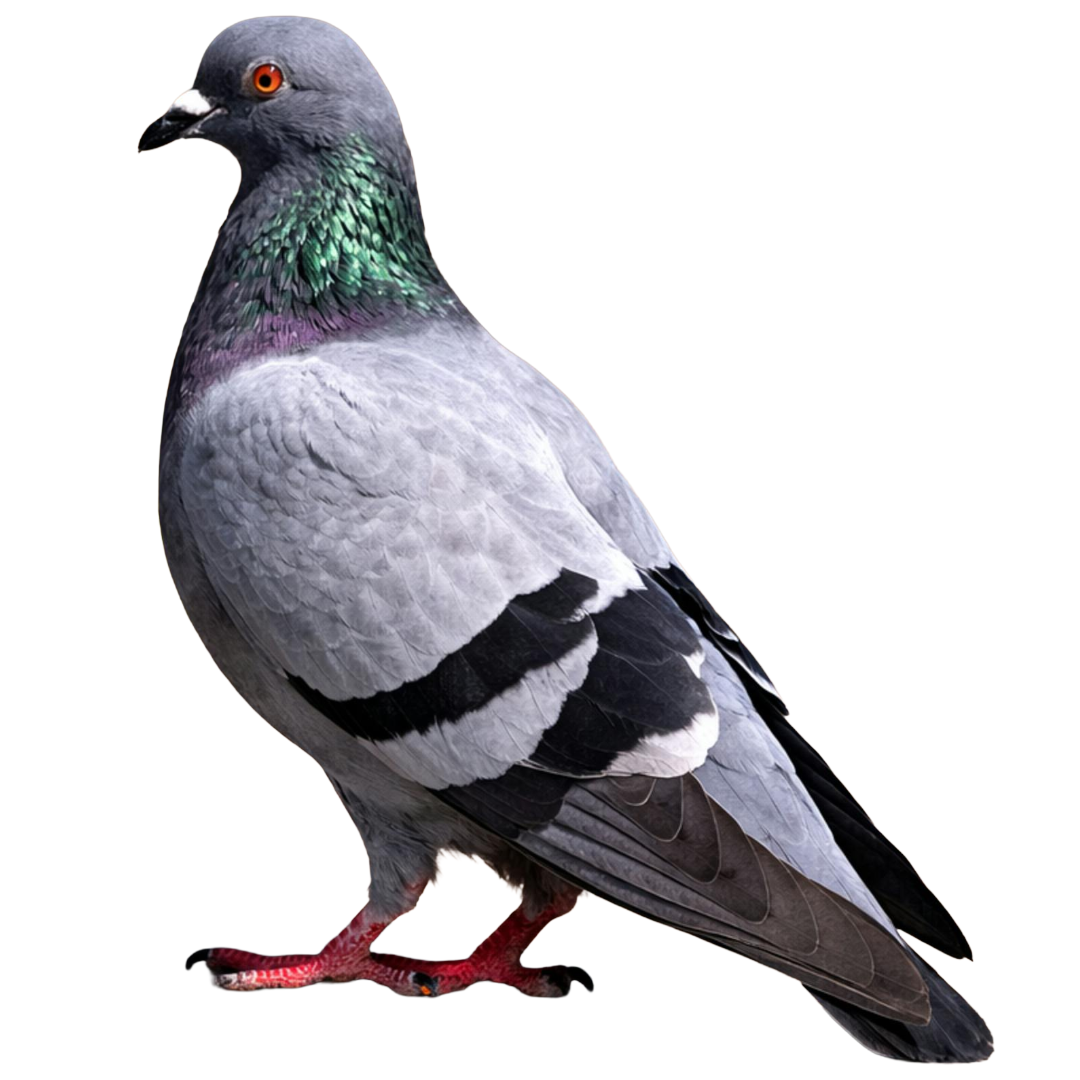
Many bird species are sexually monomorphic, meaning males and females can look almost identical, as adults or when very young. In these cases, DNA testing provides a reliable and non-invasive way to determine sex without relying on physical traits or behaviour alone.
Today, DNA bird sexing can be approached in two main ways:
- sending samples to an external DNA testing service
- running the workflow yourself using PCR and gel electrophoresis
Both approaches can be effective, but they suit different situations depending on sample numbers, turnaround times, budget, and workflow preferences.
Why use DNA sexing?
Visual sexing methods can sometimes be unreliable, especially in species with minimal sexual dimorphism, breeding programs, or conservation and rehabilitation workflows
DNA-based methods allow users to determine sex earlier and with high accuracy using samples such as feathers, blood spots, eggshell membranes or tissue samples.
For many users, DNA testing helps reduce uncertainty while supporting breeding management, species monitoring, conservation work, and educational activities.
External DNA Testing Services
External testing services are often the simplest option for occasional testing or users who prefer to outsource the workflow entirely. However, external testing can become expensive when processing larger numbers of samples, and turnaround times may depend on shipping and laboratory schedules.
- Higher cost per sample ($15 – $30)
- Results within days (3–7 days)
- No equipment required
- Samples shipped externally
- Suitable for occasional testing
- No workflow visibility
DIY Bird Sexing PCR Workflows
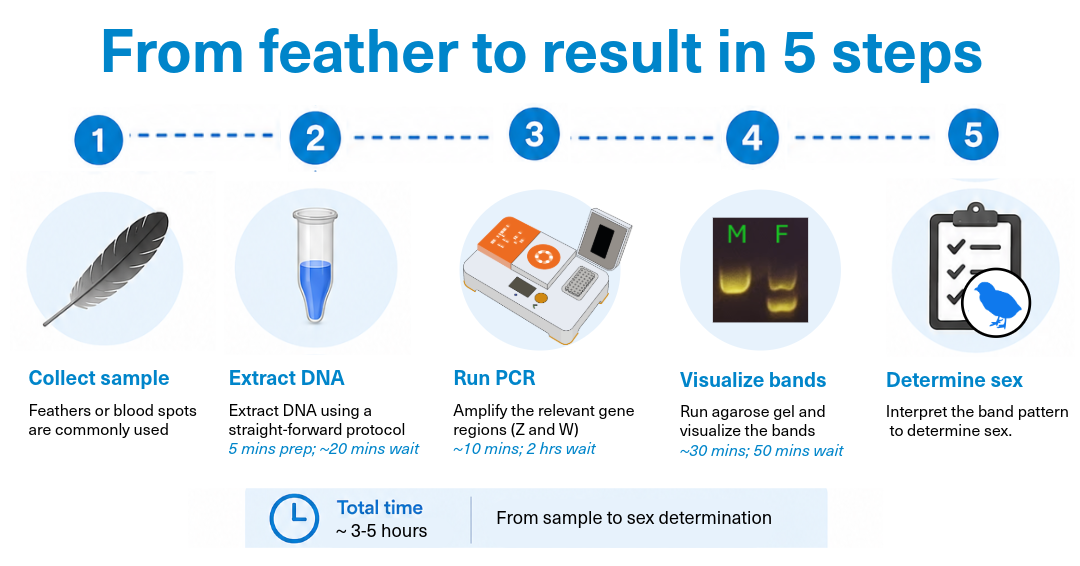
Running the workflow yourself involves collecting samples, extracting DNA, performing PCR amplification, and visualizing results using gel electrophoresis. Many users begin with small workflows involving only a handful of samples before gradually expanding to larger projects or repeated testing.
- Lower long-term cost per sample ($1.50+)
- Results within hours (3–5 hours)
- Initial investment into equipment and learning required
- Workflow performed locally
- Suitable for repeated workflows
- Full control and learning opportunity
What does a DIY workflow involve?
A typical bird sexing PCR workflow includes sample collection, DNA extraction, PCR amplification, gel electrophoresis, and results interpretation, with the majority of the steps done on the all-in-one Bento Lab. Most beginner workflows can be completed within a single day.
How accurate is bird sexing PCR?
PCR-based bird sexing workflows are extremely reliable when used with suitable primers, good workflow practices, and suitable negative and positive controls.
If the PCR fails, then you will get no result or unclear results, rather than an incorrect sex determination. In these cases, repeating the PCR and/or gels using diluted DNA extractions often solves the problem.
Good workflow organization is important, including:
- careful sample labelling
- contamination prevention
- use of controls
- correct primer selection
The science behind bird sexing PCR
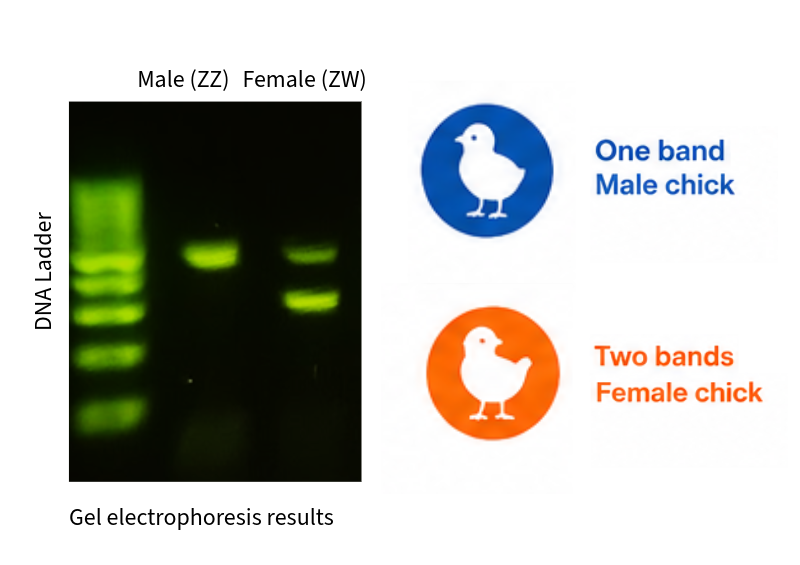
Birds use a ZW sex chromosome system:
- males are typically ZZ
- females are typically ZW
PCR bird sexing workflows commonly target differences between CHD1 gene variants found on these chromosomes.
After PCR amplification, the sex differences can be visualized using gel electrophoresis:
- males typically produce one visible DNA band of an appropriate size (compared to a DNA ladder)
- females typically produce two visible DNA bands
The Takeaway: Which approach is right for you?
External services may suit you if:
- you only test occasionally
- you want minimal setup
- you prefer outsourcing the workflow
- rapid turnaround times are not essential
DIY PCR workflows may suit you if:
- you test birds regularly
- you want to reduce long-term costs
- you enjoy hands-on workflows
- you teach or mentor others
- you want faster results
- you are interested in learning molecular biology techniques
- you want greater workflow flexibility and control
Getting started with bird sexing PCR
Bird sexing PCR workflows are becoming increasingly accessible for educators, birding groups, avian breeders, conservation projects, and first-time molecular biology users.
Whether you are planning a small pilot workflow or building a more regular setup, starting with a simple and well-organised workflow can make the learning process much more approachable.