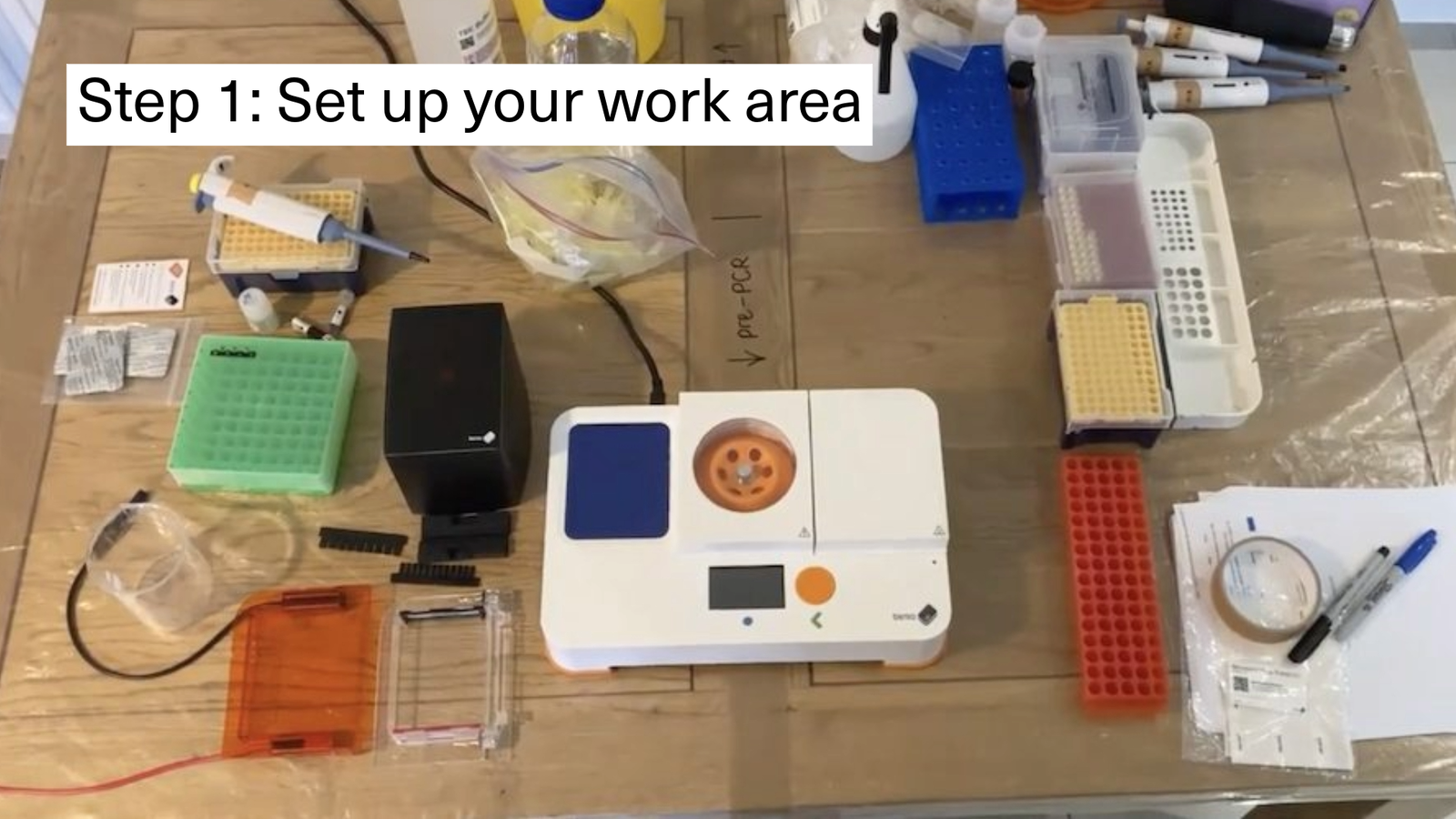
You don’t necessarily need a dedicated workspace. Many bird sexing workflows are run in: classrooms, field stations, or small workspaces.
Bird Sexing Guide
The full Bento Lab bird sexing workflow
See the bird sexing workflow in action
Follow along with Dr Jenny Shelton as she extracts DNA from pigeon feathers and sets them up on the Bento Lab as part of the process she underwent to test primers and the bird sexing workflow.

Before you begin
Pick your species
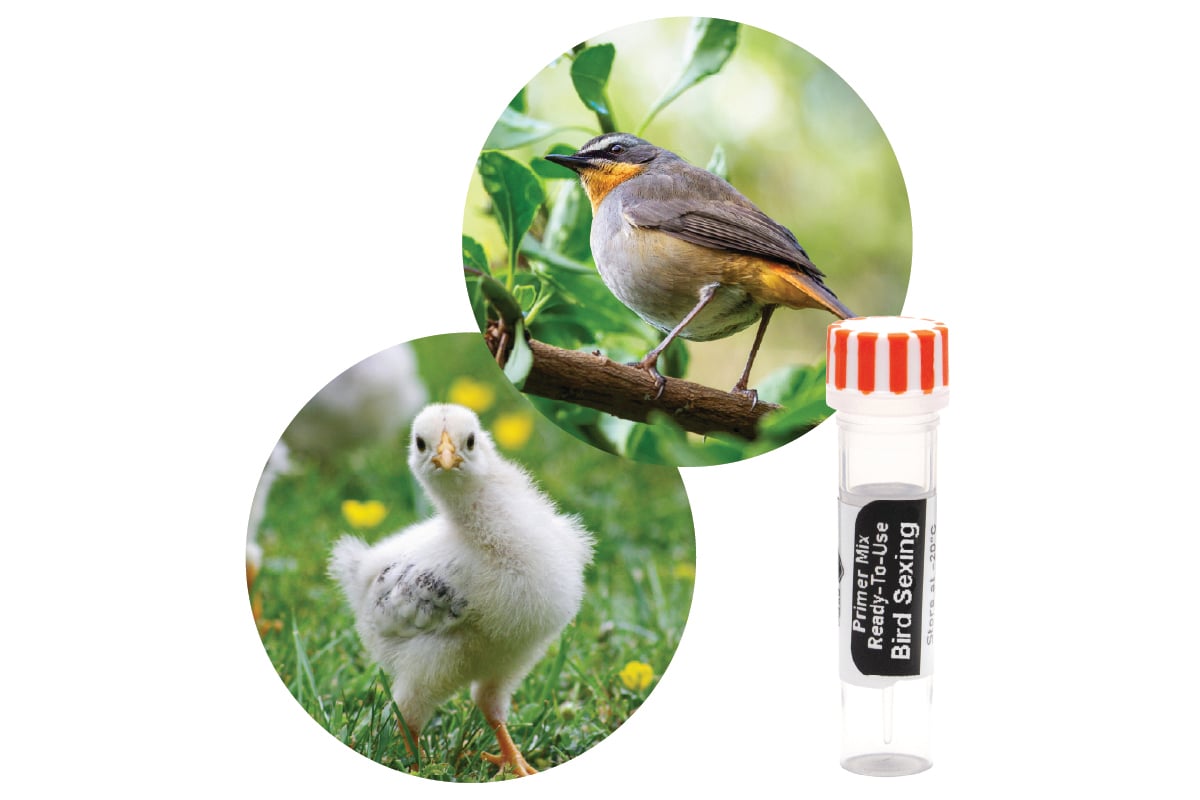
Before you begin, you need to choose the right primer set for your bird species. A primer set contains two or more primers, which are short strands of DNA that act as “tags” to define the part of the DNA that is amplified. For bird sexing, the primers target DNA on the bird’s sex chromosomes associated with male or female birds.
No single primer set works for every bird species, so we offer four different options. Between them, they can be used to sex most bird species. We’ve created a tool to allow you to search by species (common name, or scientific name) to see which primer set we would suggest. If your specific species is not included, you can also search by genus to give you a suggestion of which primer set to test.
NOTE: The table shows which primers have previously been found to work when sexing different species of bird species. This is not a complete list, and there will be exceptions – please use it as a guide, and ask us for help if you would like advice.
How it works, step by step
The complete workflow
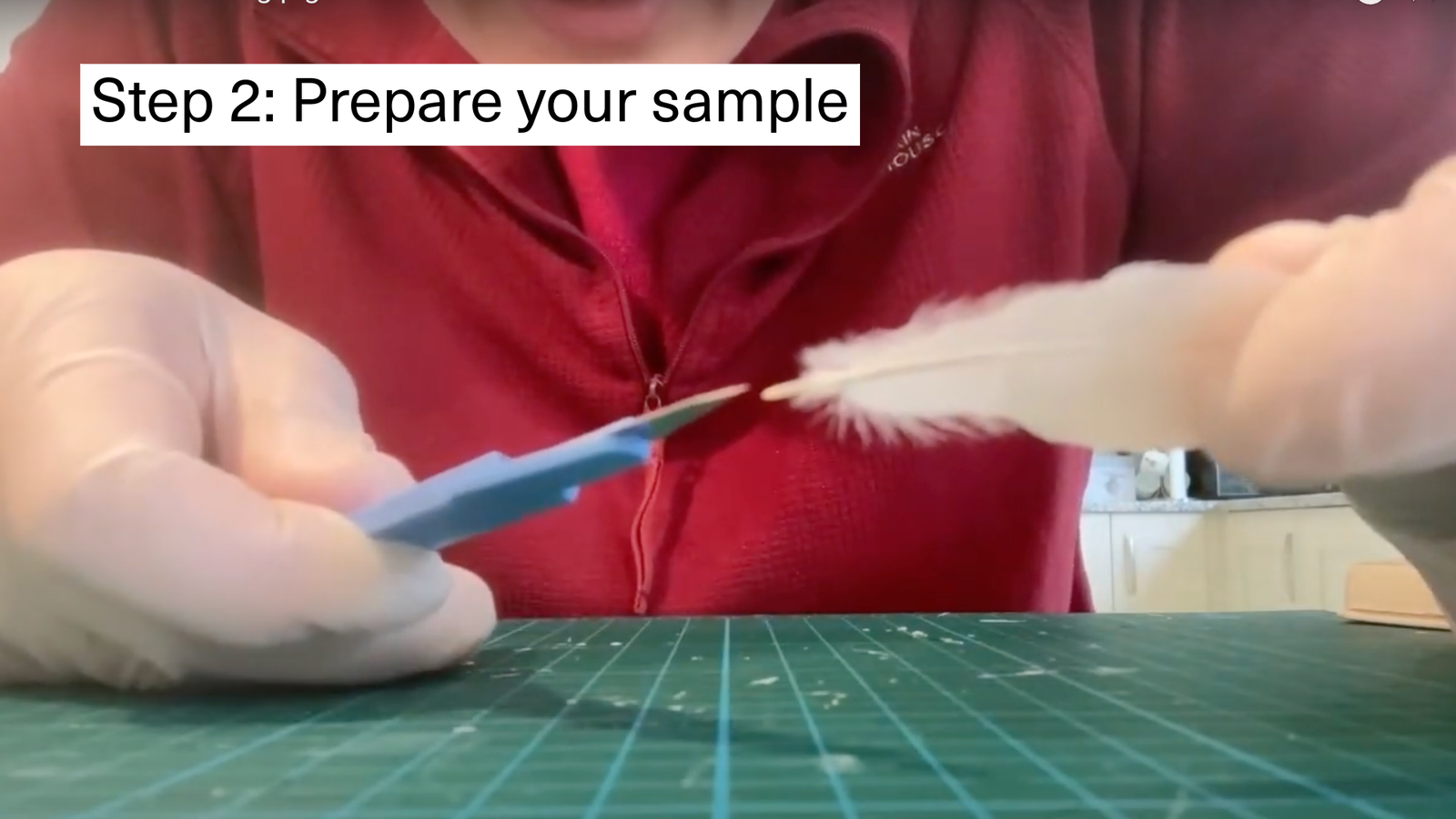
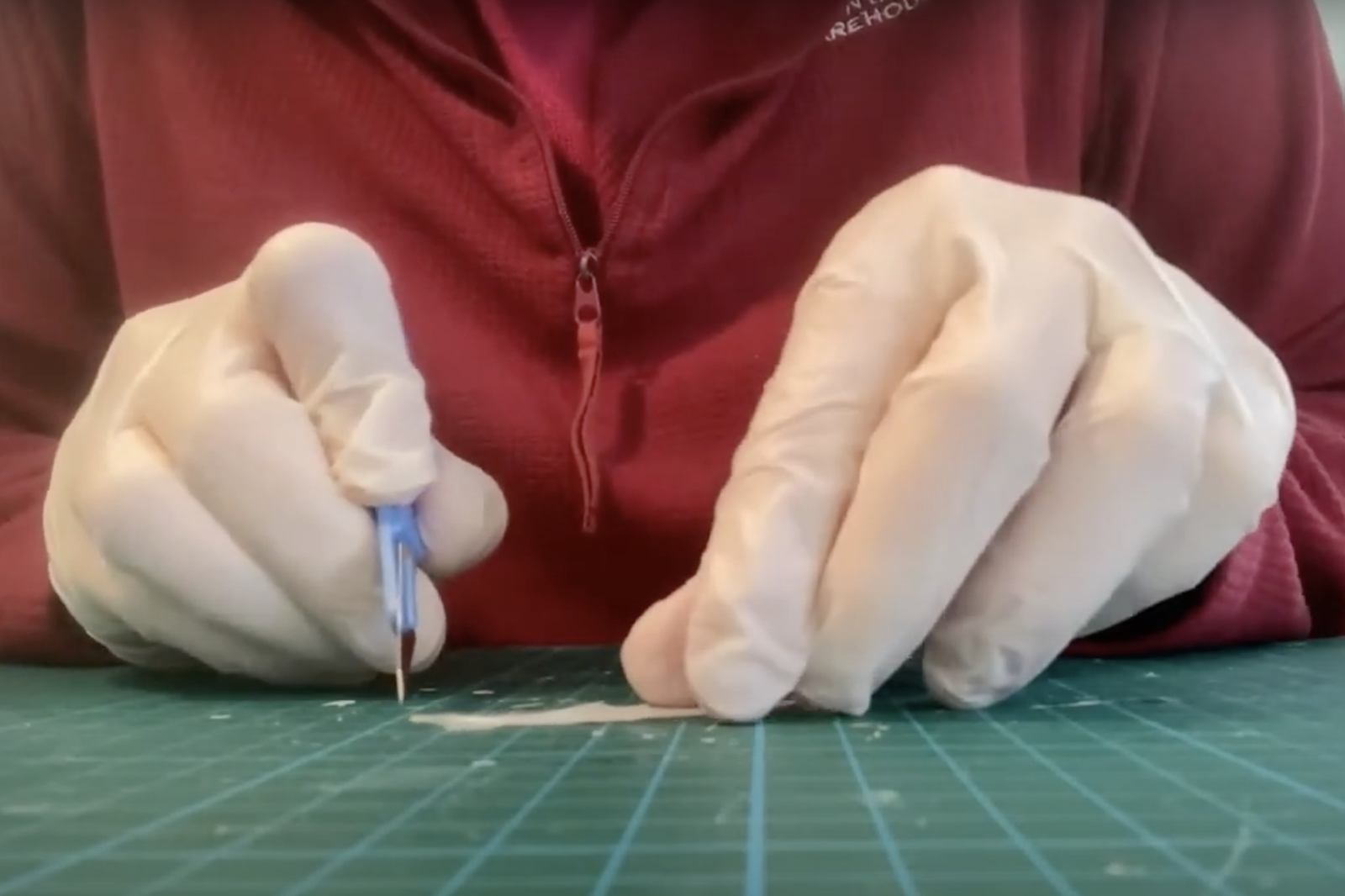
The two most commonly used sample types are feather tips or dried blood spots.
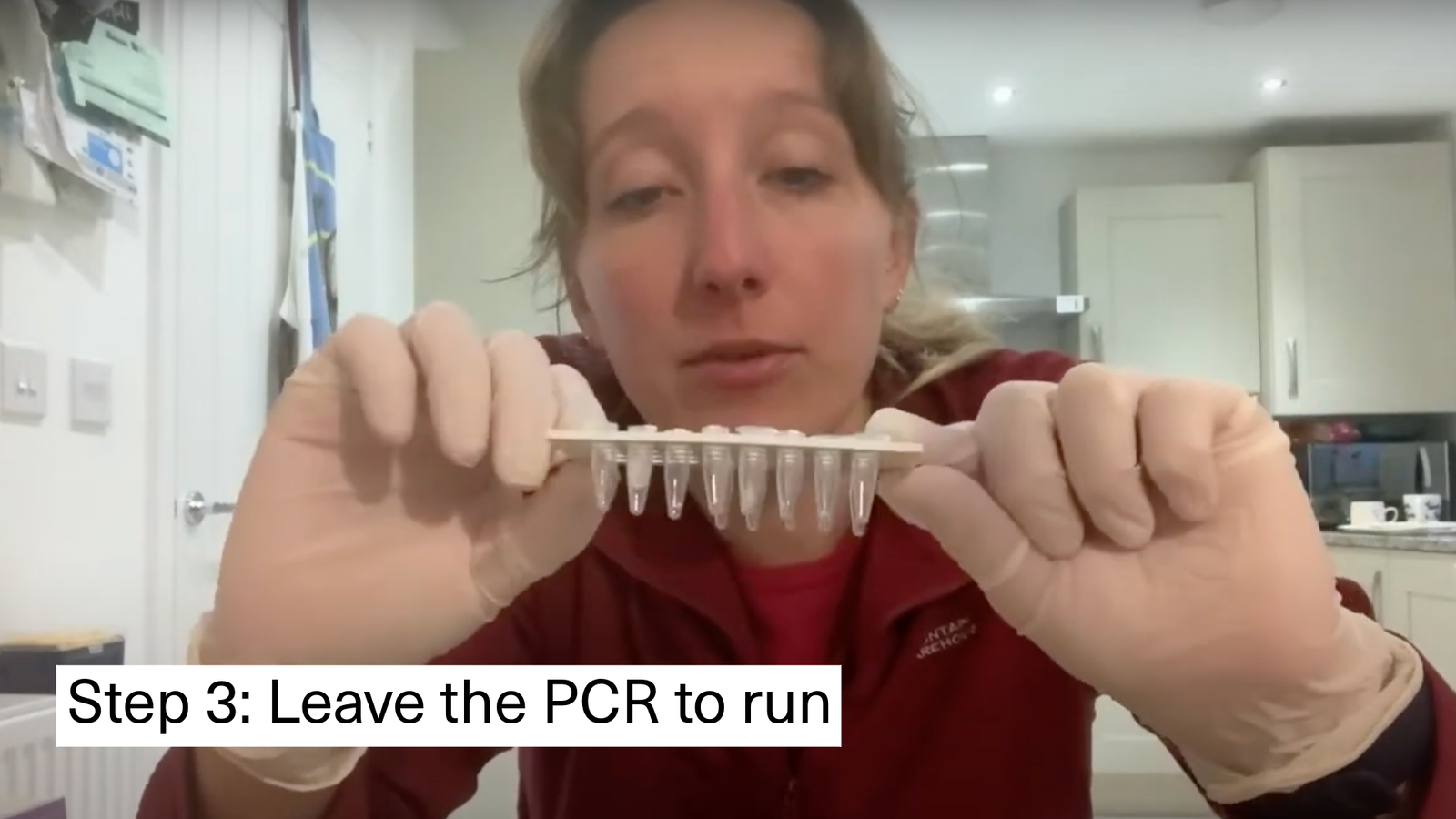
Set up and run a PCR using the instructions specific for your chosen primer set:
- Set 1: CHD1F/CHD1R
Suitable for many common birds, including chickens and songbirds - Set 2: 2550F/2718R
Suitable for many (but not all) parrots, birds of prey, storks, pelicans, and others. - Set 3: P0/P2/P8
Suitable for difficult birds that can’t be sexed using the other primer sets, including ostrich, owls, penguins, and other birds. - Set 4: CHD1LF/CHD1R
Suitable for pigeons and a variety of other birds. - Advice for working with parrot samples
To see the results of your PCR test, prepare a 2% agarose gel and load your PCR samples and DNA ladder into the Bento Lab.
Run the gel for around 45 minutes for a quick check, or up to 1 hour 30 minutes for maximum separation and clarity.
If this is your first time running a gel:
- Follow the Bento Lab Biotechnology 101 Guide to Gel Electrophoresis for an introduction.
- See the Bento Lab Manual sections Casting a Gel and Running a Gel for practical tips and troubleshooting.
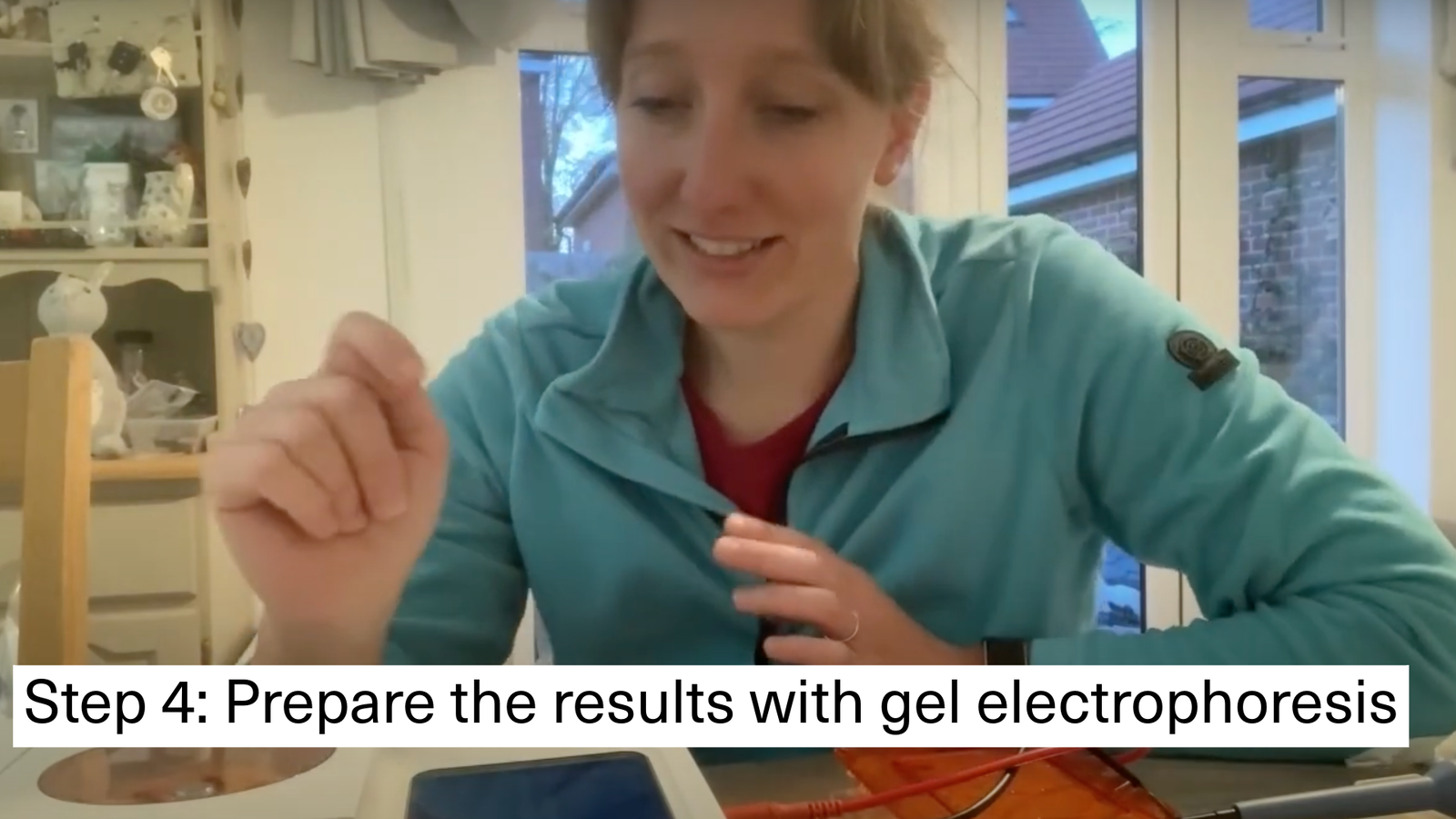
Once the run is complete, place the gel on the blue Bento Lab transilluminator and use the Gel Imaging Hood to view and photograph the results with your smartphone.
Compare the pattern of DNA bands (visible lines on the gel) to the guidance in your protocol to determine whether the bird is male or female.
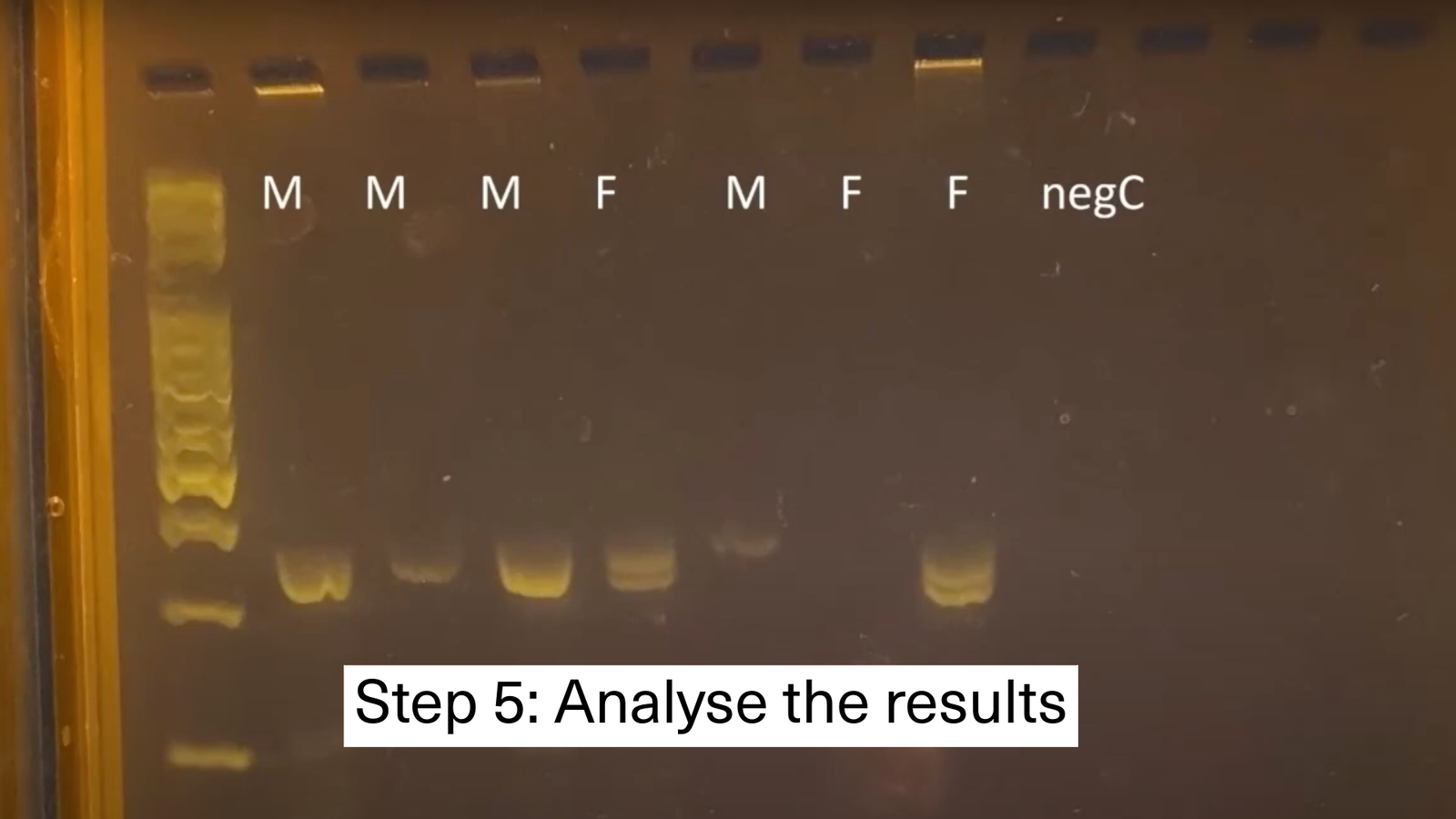
Examples of the bird sexing workflow in action
Use cases
Romney Edwards-Francis, University of the Sunshine Coast, Queensland (2026)
Rebecca E. Stephens, M. Elisa González, Amanda E. McNeill, Lucy E. Floyd, Abigail R. Howell, Kenneth F. Kellner, Patrick J. Ruhl, Southeastern Naturalist (2025)
Nestling sex allocation in European Starlings: the role of parental condition and nest greenery
Kaitlyn Kemp-Cheevers, Saint Mary’s University, Halifax (2025)
M. Leigh Bailey, Cameron Nixon, Douglas B. Rusch, Aaron Buechlein, Kimberly A. Rosvall, Alexandra B. Bentz, Hormones and Behavior (2024)
Genomic signatures of selection for resistance to lead exposure in turkey vultures (Catharses aura)
Alexandria Bruennel Koedel, California State Polytechnic University (2023)
All you need to get started
Bird Sexing Bundle
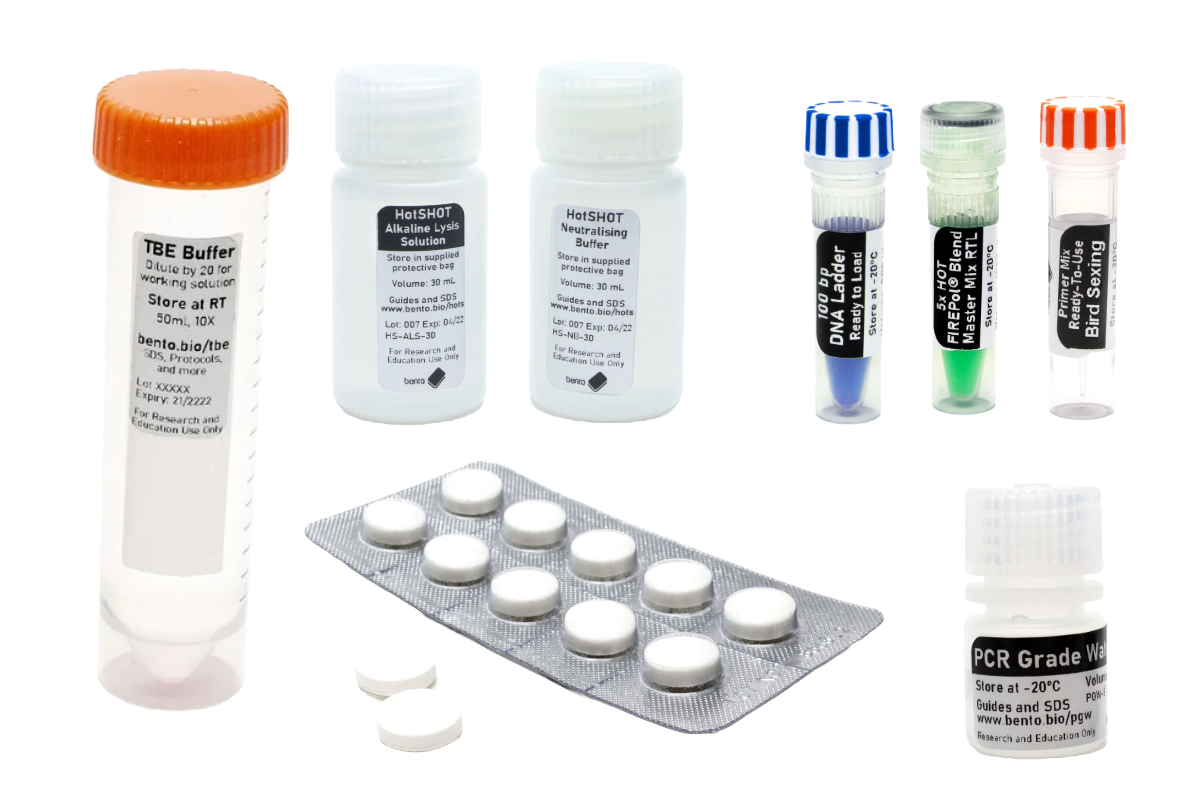
Start processing samples with our Bird Sexing Starter Materials kit, which contains all the reagents, plastic consumables and accessories you need for our protocols.
In addition to accessories and reusable materials, this kit contains enough reagents to process a minimum of 48 bird samples.
NOTE: The bundle does not include equipment. You will need Bento Lab or an equivalent, and a microwave or other heat source for melting agarose gels. See this guide for a complete list.
Learn step-by-step with live support
Get started with a course
Want support to confidently determine the sex of your birds using DNA testing? Our 1:1 training sessions will teach you everything you need to know — from collecting samples to analyzing results with Bento Lab.
Our training course covers:
- How to collect a sample from your bird for testing
- How to prepare a DNA sample for analysis
- How to analyse your results
- How to troubleshoot if things go wrong
Frequently Asked Questions
If you’re new to DNA sexing, these answers will help you understand why it’s useful, how accurate it is, what you need to get started, and more. Whether you’re wondering about sample collection or costs, this FAQ covers the key points to get started. If you have other questions, get in touch with us.
Why should I use DNA sexing instead of visual methods?
Many bird species are sexually monomorphic, meaning males and females look identical. DNA sexing provides a fast, accurate, and non-invasive way to determine sex without relying on physical traits.
How accurate is DNA bird sexing with PCR?
DNA testing is over 99% accurate when performed correctly. It identifies a bird’s sex by detecting differences in genes found on the sex chromosomes.
If a PCR test goes wrong then it should produce no result (a blank), or an uninterpretable result, rather than the wrong result (with the exception of the P0/P2/P8 primer set).
However, user error and cross-contamination can produce false positives and negatives. These include:
- Using inappropriate primer sets for the bird species (check you are using the correct primers)
- Mixing up your samples (keep your samples and workflow organised)
- PCR product cross contamination (make sure you use negative controls and maintain good PCR hygiene)
- Misinterpreting the agarose gel (always compare your results with expected results, and learn how to identify non-specific amplification).
Which birds can be sexed using the PCR method?
Many bird species can be sexed using this method. The most common approach (based on the CHD1 gene) works for a wide range of species, and we also provide a few alternatives for cases where CHD1 test may not be suitable.
To find out if your bird species is supported, check our searchable guide:
Choosing a DNA Primer Set for Bird Sexing
If your species isn’t listed, or you’re unsure, feel welcome to get in touch with us — we’re happy to offer advice.
What types of samples can be used for bird sexing?
Feathers, blood, or eggshell can all be used for DNA sexing. Feathers are generally the least stressful and easiest to collect, making them a popular choice.
- Feathers (pulled, not shed)
- A small drop of blood (from a clipped nail or vein)
- Eggshell membrane fragments (from recently hatched eggs)
How do I collect a sample safely without harming the bird?
For feathers, gently pluck 2-3 from the chest or underwing. For blood, a tiny drop from a clipped nail is enough. Always follow ethical handling guidelines to minimize stress.
What will I need for the PCR birdsexing workflow?
We recommend getting our Bird Sexing Bundle and Bento Lab, which will equip you with almost everything you need, apart from a few standard items like water, gloves and paper towel.
All the reagents, consumables and equipment you need in order to follow the DNA Extraction from Feathers and Bird Sexing Protocol are listed below.
Reagents
- HotSHOT DNA Extraction Kit
- 5x FIREPol® Master Mix Ready To Load or 5x HOT FIREPol® Blend Master Mix Ready to Load
- PCR Grade Water
- Bird Sexing Primer Mixes
- Agarose Tablets
- GelGreen® DNA Stain
- 100 bp DNA Ladder
- 10X TBE buffer (to be diluted to 0.5X)
- Deionised water (not included)
Consumables
- Plucked feather(s)
- Disposable scalpels or razor blades (not included)
- Nitrile gloves (not included)
- Paper towel (not included)
- 2-200μl Pipette Tips (1 rack)
- PCR tubes
Equipment
- Bento Lab
- Glass beaker or conical flask (not included)
- 2-20μl Adjustable Pipette
- 20-200μl Adjustable Pipette
- Microwave
How much does PCR-based bird sexing cost per sample?
Once you have equipment, the cost can be as low as $2 USD per sample for the materials – depending on which materials you use, and if you’re processing multiple samples at once. We would suggest starting small, and estimating about $5 USD for materials per sample at the very start.
We have put together a spreadsheet calculator if you want to calculate how the costs change with different quantities of samples.
If you have any questions or feedback about the spreadsheet, please get in touch. We are happy to discuss costs via email.
How many samples can be processed in one workflow with Bento Lab?
DNA extraction, PCR, and agarose gel visualisation of up to 30 samples (plus a positive and negative control) can be achieved with a single heat-lysis DNA extraction, a single PCR program, and two double-lane agarose gels run consecutively using the Add-A-Lane comb (bought separately).
However, the number of samples that can be processed from sample to PCR to agarose gel visualisation in a single batch will depend on your exact workflow.
If your DNA extraction requires a centrifuge step using Bento Lab’s 6 × 2 mL tube mini-centrifuge (for example using spin-column DNA extraction kits, or DNA precipitation) then your throughput will be limited by the capacity of this unit.
If your gel electrophoresis visualisation requires a single 12–lane gel for better band resolution (for example for the differentiation of very similarly sized amplicon bands) then this will limit your capacity to eight samples per gel (plus a positive and negative control, and two DNA ladders) and may require additional gels to visualise all of your samples.
Are your bird sexing products allowed to be used to offer results to the public?
Our products can, and are, used to provide commercial services. We are not aware of any country-specific regulations that prohibit offering bird sexing results to the public, but we recommend that you ensure for yourself that you are complying with any relevant regulations in your region or country.
What is the scientific background of the PCR bird sexing workflow?
Birds have two sex chromosomes known as Z and W. These are similar to the X and Y sex chromosomes in humans – each inherited from one parent. Male birds have two copies of the Z chromosome (ZZ) and females have one copy of the Z chromosome and one copy of the W chromosome (ZW). This is the opposite of the situation to humans, where most biological females have two copies of the X chromosome (XX) and most biological males have an X and a Y chromosome (XY).
This PCR workflow involves the CHD1 (Chromodomain Helicase DNA Binding Protein 1) genes, which are present on the W and Z sex chromosomes of birds as two variants – CHD1-W (on the female-specific W chromosome) and CHD1-Z (present in males and females on the Z chromosome). These genes are homologous (almost identical in structure and function) but contain introns (DNA that is removed by RNA splicing before it is translated into mature RNA) that usually differ in length between sexes within a species and between species.
This difference in length allows both sexes to be determined using a simple assay based on intron length differences. Once DNA has been extracted, regions within the CHD1-Z and CHD1-W (if present) genes can be amplified using the polymerase chain reaction (PCR), and the amplified DNA visualised on an electrophoresis gel. If only one band is present, this suggests that only one CHD1 coding variant is present (CHD1-Z), which would be expected for a male with a ZZ chromosome pair. If two bands are present, this suggests that both CHD1-Z and CHD1-W genes are present, which would be expected for a female with a ZW chromosome pair.
The advantage of amplifying both variants (if present) together is that the band produced by the CHD1-Z should always be visible – it will only be absent if the DNA extraction or PCR fails. It therefore acts as an individual positive control for each specimen.
What do the results of a bird sexing PCR workflow look like? Case study: Domestic chicken (Gallus gallus domesticus)
PCR Bird Sexing Case study:
Domestic chicken (Gallus gallus domesticus)
There are two possible results for most birds:
Female: One copy of the CHD1-Z gene is present on the Z chromosome, and one copy of the CHD1-W gene is present on the W chromosome. The target amplified regions of these genes are generally different in length and will be visible on an electrophoresis gel as two distinct bands.
Male: Two copies of the CHD1-Z gene are present – one on each of the Z chromosomes. The amplified regions of these genes are almost always identical in length and will be visible on an electrophoresis gel as a single band.
There are two primer sets that are commonly used for bird sexing as they can successfully sex birds belonging to many, but not all, taxonomic groupings. These are CHD1F paired with CHD1R, and 2550F paired with 2718R.
When these primers are used to amplify regions of the CHD1-W and CHD1-Z genes from DNA extracted from a female and a male chicken, they produce different amplicons for each sex as can be seen below: two distinct bands for the female specimen, and only one band for the male specimen.
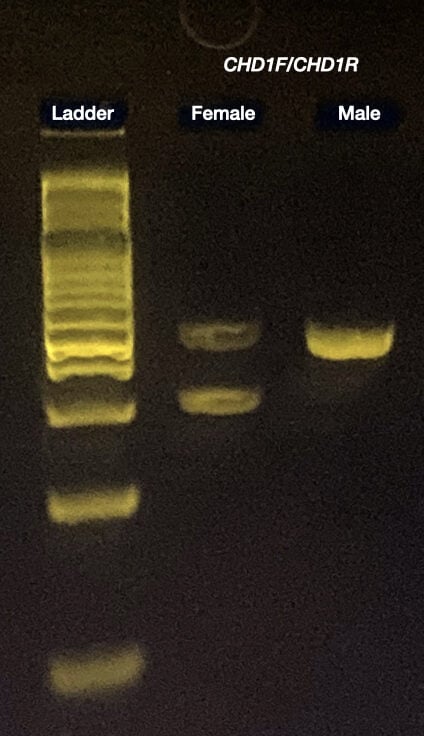
For both primer sets, there are two distinct bands for the female chicken and only one band for the male chicken.