Lactose Intolerance Teaching Lab

Can you stomach milk?

£42.50 ex VAT

Lactose Intolerance Teaching Lab

Can you stomach milk?

£42.50 ex VAT

A hands-on lab where students genotype the LCT gene to discover the evolutionary story behind milk consumption. Connect genotype to phenotype.

  • Students successfully run real PCR with clear results
  • Clear teacher guidance and student materials
  • Connect the curriculum to students’ daily experiences
  • Kit Capacity: Up to 40 Students (10 Lab Groups)
  • Value: £1.06 per student lesson
-
+

Genetics of Lactose Intolerance: A Personal Mystery

Turn your students into genomic researchers. Instead of testing a random sample, your class will use PCR to amplify their own DNA to investigate the genetic switch behind milk digestion. By investigating a single-letter change (SNP) in the LCT gene, students discover exactly how a one-base mutation determines a lifetime of dietary health.

Your students will make the link between their molecular code (genotype) and their daily lives (phenotype). Lead an authentic investigation into human evolution and natural selection, all while mastering the same biotechnology tools used in modern medical testing.

Time Required

2-3 Class periods

Class Size

Up to 40 Students
(10 Lab Groups)

Curriculum Level

Advanced high school classes
to college

Safety First

Non-toxic, shelf-stable reagents.

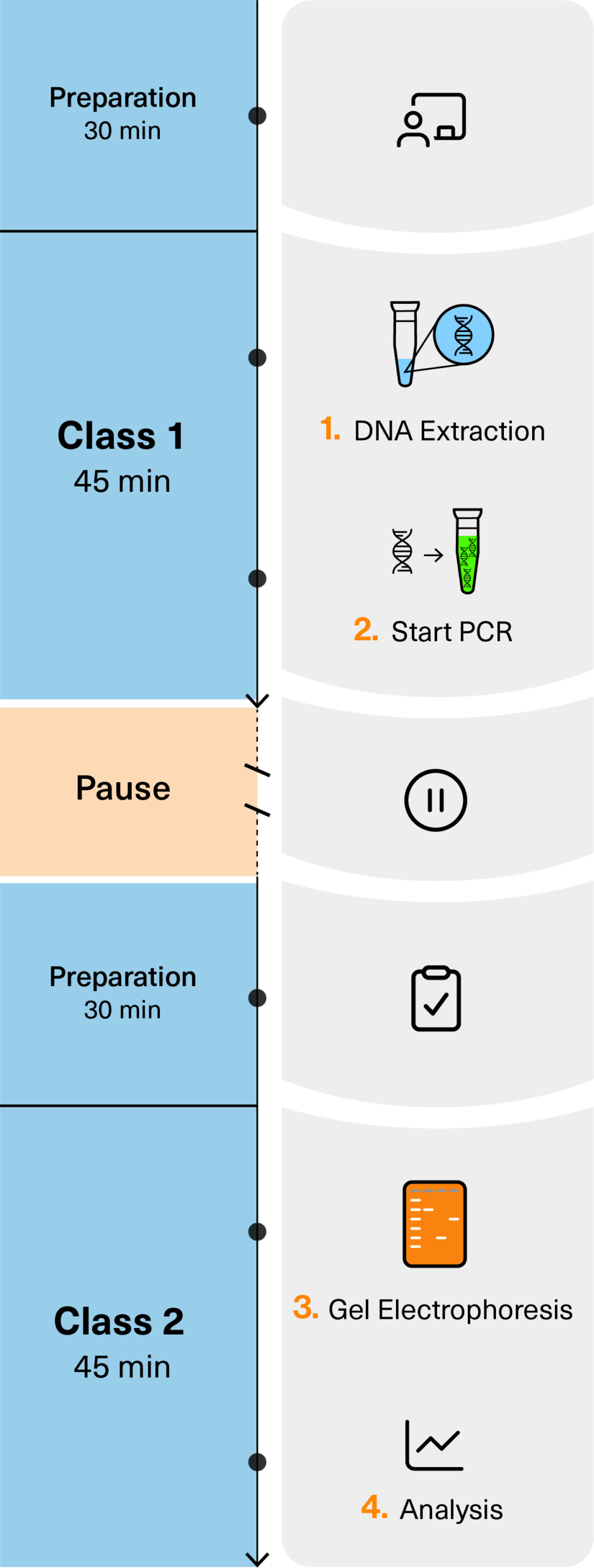
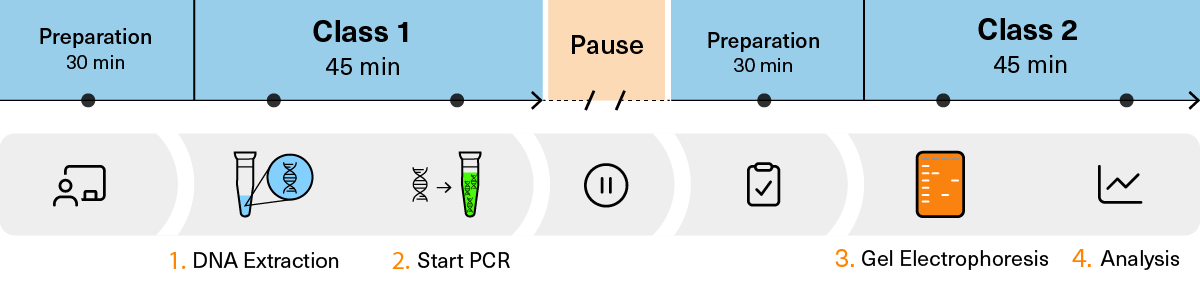
Lesson Flow: Time to result

Diagram showing the flow of a lesson

Learning Outcomes & Curriculum Alignment

Topics

  • Evolution: Discuss “Lactase Persistence” as a classic example of recent human evolution and natural selection.
  • Biochemistry: Link the LCT gene to enzyme function and metabolic pathways.
  • SNP Analysis: A perfect introduction to Single Nucleotide Polymorphisms (SNPs).

Techniques mastered

  • Micropipetting
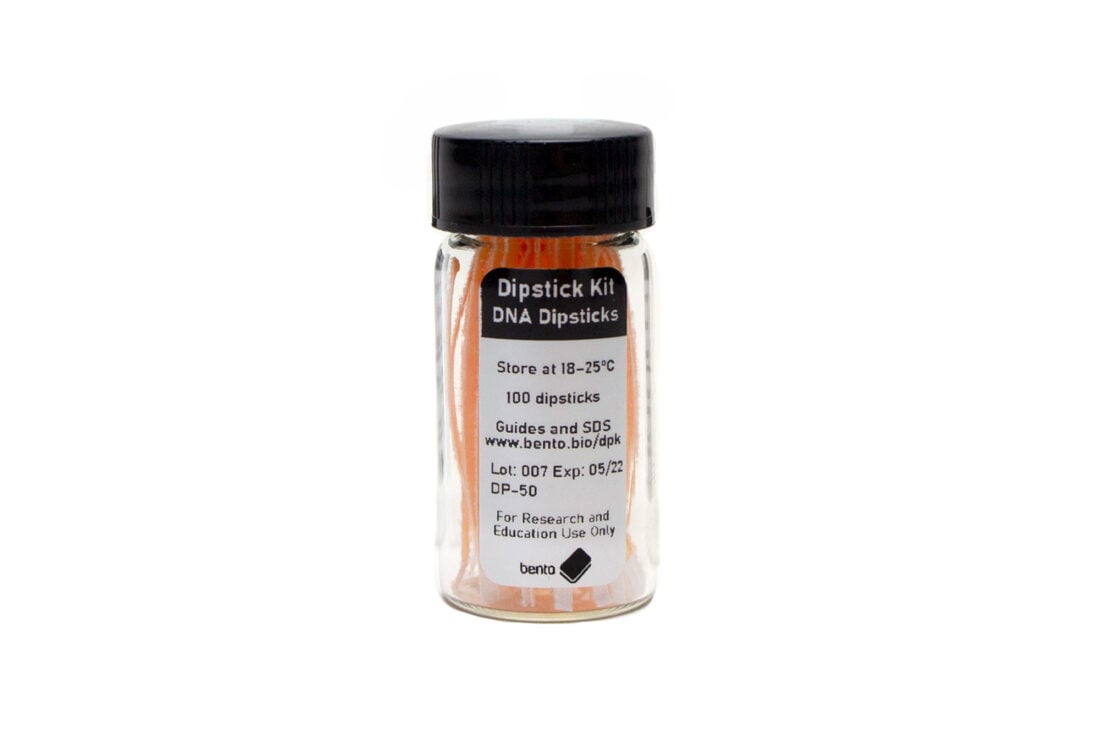
  • DNA extraction
  • PCR
  • Gel electrophoresis

Standards

  • AP Biology: Alignment with Unit 6 (Gene Expression & Regulation).
  • NGSS: Addresses HS-LS3-3 (Predicting variations in traits)

Materials

What’s included in the kit?

This kit provides the core molecular reagents for this experiment. To see the full list of required lab equipment and consumables (like tips and tubes), view the Materials and Equipment list in the Teacher’s Guide.

Storage & Shipping

  • Shipping: Ships ambient.
  • Storage: Reagents require freezer storage (-20°C) upon arrival. Shelf life: 12 months.

FAQ

Will this work with a class of 30?

Yes, if you have equipment and the other required materials for this number of students. The kit contains enough reagents for up to 40 students.

What if I have never taught PCR before?

The Student Lab Guide contains simple step-by-step instructions on how to complete the experiment, so prior PCR teaching experience isn’t essential.

However, we suggest that you learn how to use your specific lab equipment beforehand; ensure that you can use a micropipette; read through the Instructor Guide and Student Lab Guide; and do a practice run before class to ensure you are comfortable with the techniques.

Depending on your lesson and curriculum planning, you might also want to learn and include background information on DNA extraction, PCR, and gel electrophoresis, so you can provide context to the experimental steps done in class.

How long does setup take?

Preparation should take less than 30 minutes before each class. Some of the preparation, such as making a 0.9% saline solution, programming thermocycler programs, and aliquoting reagents, can be done at any time in advance of the class.

What equipment do I need?

You will need micropipettes, centrifuge/s, a thermocycler, and an agarose gel electrophoresis tank and blue light transilluminator. You will also need plastic consumables and some miscellaneous items described in the Instructor Guide.

Please note that the experiment will work best if there is enough equipment for students to get hands-on with each item of equipment.

Can students see real results every time?

Yes, each sample should result in a real result based on that person’s genetic makeup.

Is this suitable for younger students?

The kit is intended for undergraduate and older high school/secondary school students, but there is nothing intrinsically unsafe in the kit that would make it unsuitable for younger students if properly supervised by adults.