Bird sexing PCR workflows can now be run in a wide range of settings, from classrooms and workshops to birding groups, conservation projects, avian breeding programmes, and small laboratories.
This guide walks through the core equipment, workflow steps, and planning considerations needed to get started with bird sexing PCR.
Whether you are exploring your first workflow or planning a small shared setup, many users begin with surprisingly simple workflows and gradually build confidence over time.
Who is this guide for?
This guide is designed for:
- first-time PCR users
- educators and workshop organisers
- birding groups and community projects
- avian breeders
- conservation and rehabilitation teams
- small laboratories exploring in-house workflows
What does a bird sexing PCR workflow involve?
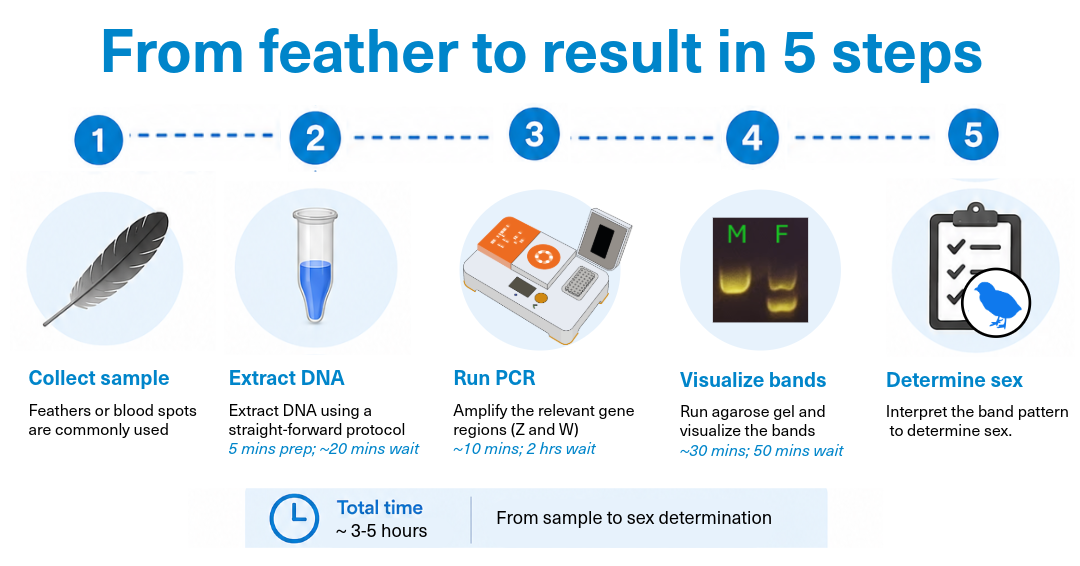
A typical bird sexing PCR workflow includes sample collection, DNA extraction, PCR amplification, gel electrophoresis, and results interpretation, with the majority of the steps done on the all-in-one Bento Lab. Most beginner workflows can be completed within a single day. See the workflow, step-by-step.
What equipment do I actually need?
Buy from us
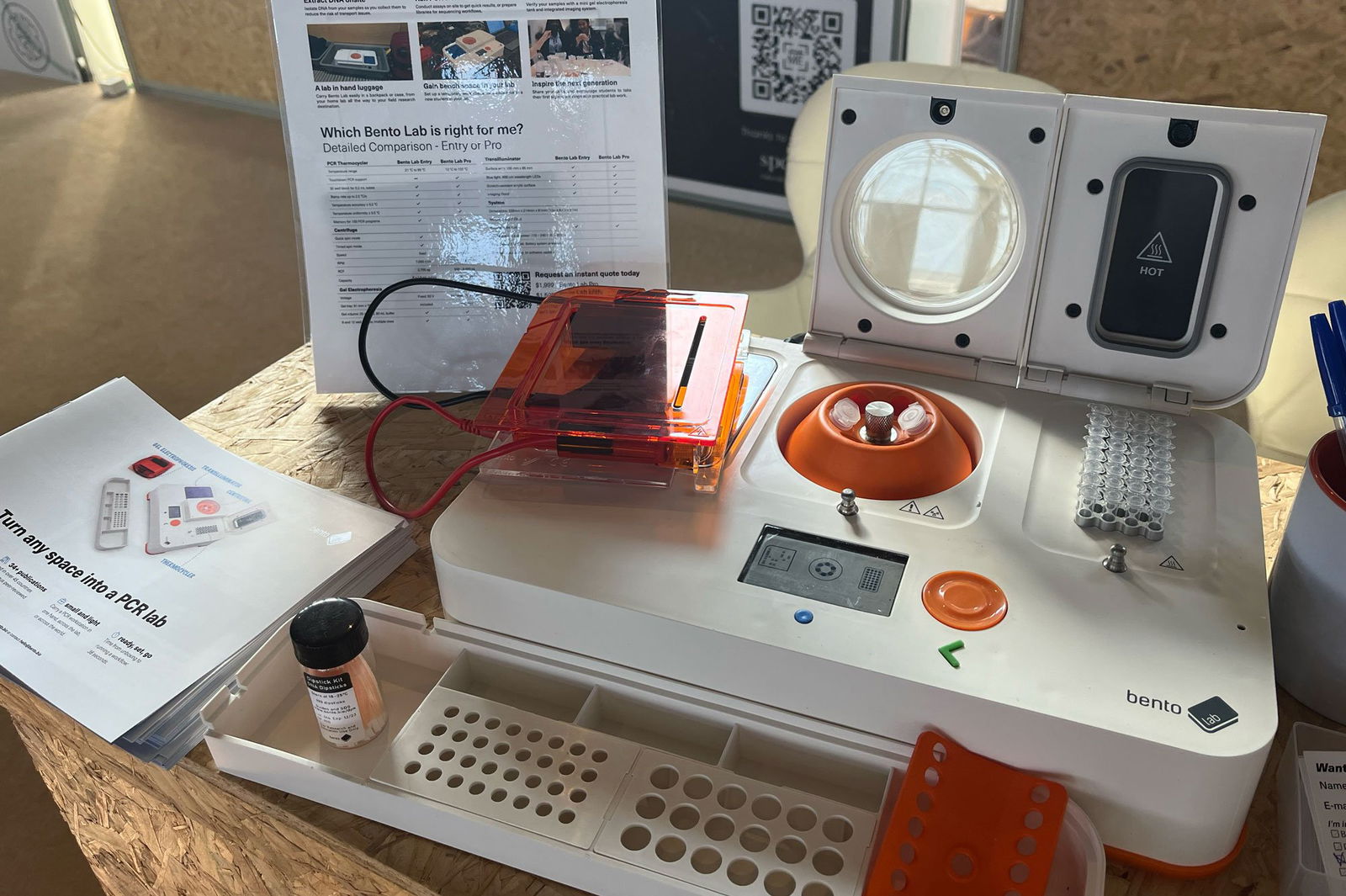
- A Bento Lab or equivalent lab equipment. We have two Bento Lab models, Pro and Entry (detailed comparison here):
- Bento Lab Pro: more versatile, can use touchdown PCR protocols, with an adjustable high speed centrifuge (8,000 ×G), and adjustable gel voltage – Recommended for bird sexing workflows
- Bento Lab Entry: has a fixed speed centrifuge (2,700 × G), and fixed gel voltage, but no option for touchdown PCR protocols if you need that function.
- Our Bird Sexing Materials Starter Kit (for 48 birds)
- A top-up of enough DNA extraction reagents, PCR reagents, and plastic consumables for a given number of samples (e.g. 100 – 400) (see here for details)
Buy elsewhere
- A microwave oven for melting agarose gels
- A freezer for storing reagents
- 1 L of distilled/deionised water for making 0.5× TBE electrophoresis buffer from the 10× TBE stock solution
- An empty 1 L bottle to make up 0.5× TBE electrophoresis buffer from the 10× TBE stock solution
- Permanent markers for labelling tubes
- Nitrile/latex gloves (some are included in the Bird Sexing Materials Starter Kit, but you will need more once you run out)
- A sealable plastic container for plastic waste/tip bin
- A small bin/bin bag (for general waste)
- A decontamination solution: one part thin domestic bleach and nine parts tap water, with a drop of detergent added, ideally in a spray bottle for easier use
- Kitchen roll or paper towels for spills and drying purposes
What are the nice-to-have’s?
Buy from us
- Add-A-Lane comb to allow you to run up to 24 lanes in a gel
- An extra 20 µL micropipette for working only with PCR products, to minimise PCR product contamination risk
- Magnesium Chloride (25 mM MgCl2), a PCR additive that supplies essential Mg²⁺ ions as cofactors for DNA polymerase activity, while also influencing primer annealing, amplification specificity, and yield. It can be useful for EDTA-preserved blood samples (to counteract the EDTA), and has been used in some studies to improve DNA fragment amplification (e.g. in birds of prey).
Buy elsewhere
- One or more large plastic trays to work on
- Kitchen roll/paper towels/aluminium foil to work on
- Small plastic bags to store DNA extracts and PCR products
- Small boxes to store reagents in the freezer
- Larger plastic boxes for equipment (e.g. 9 L “Really Useful Boxes”)
- A small electronic kitchen weighing scale (accurate to 1 g or less) for measuring electrophoresis buffer
- Tweezers (e.g. ×10)
- Double-edged razor blades as a cheap disposable tool for cutting feathers
Do I need a dedicated laboratory?
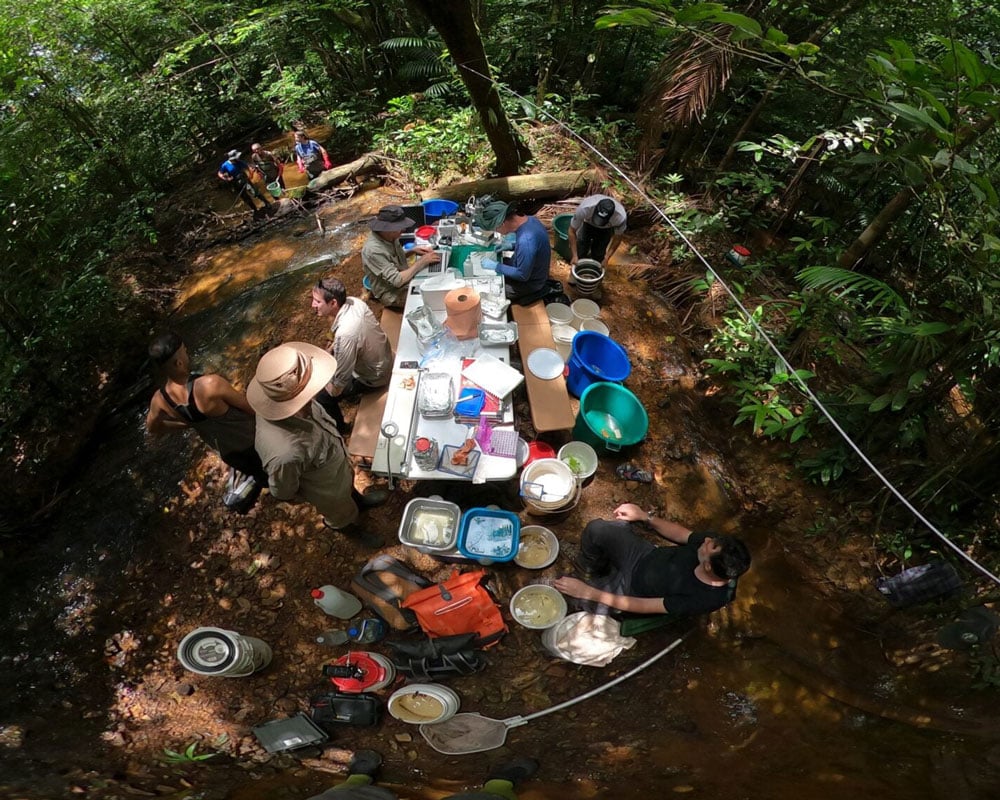
Not necessarily.
Many bird sexing workflows are run in:
- classrooms
- workshops
- shared learning environments
- birding clubs
- small workspaces
- field stations
We’ve even seen set-ups on a picnic bench beside a lake, a wall on a mountainous field site, or a table at a tropical research station.
Good workflow organisation and contamination prevention are important, but many users begin without access to a traditional laboratory environment.
How much does it cost to get started?
Costs vary depending on the number of samples, whether equipment is already available, workflow scale, sample type, and reagent choices
For many users, bird sexing PCR becomes more cost-effective over time compared to repeatedly outsourcing samples to external testing services.
Typical beginner considerations
- starter equipment setup
- beginner consumables
- sample throughput
- future scalability
What resources are available?
Getting started with bird sexing PCR can feel intimidating at first, particularly for users who are new to molecular biology workflows.
To help support beginners, we provide:
- primer selection resources
- PCR protocols
- Step-by-step tutorials in our Biotechnology 101 series
- Online training
Many users successfully learn workflows independently using structured resources and small pilot workflows.
Planning a workshop or shared workflow?
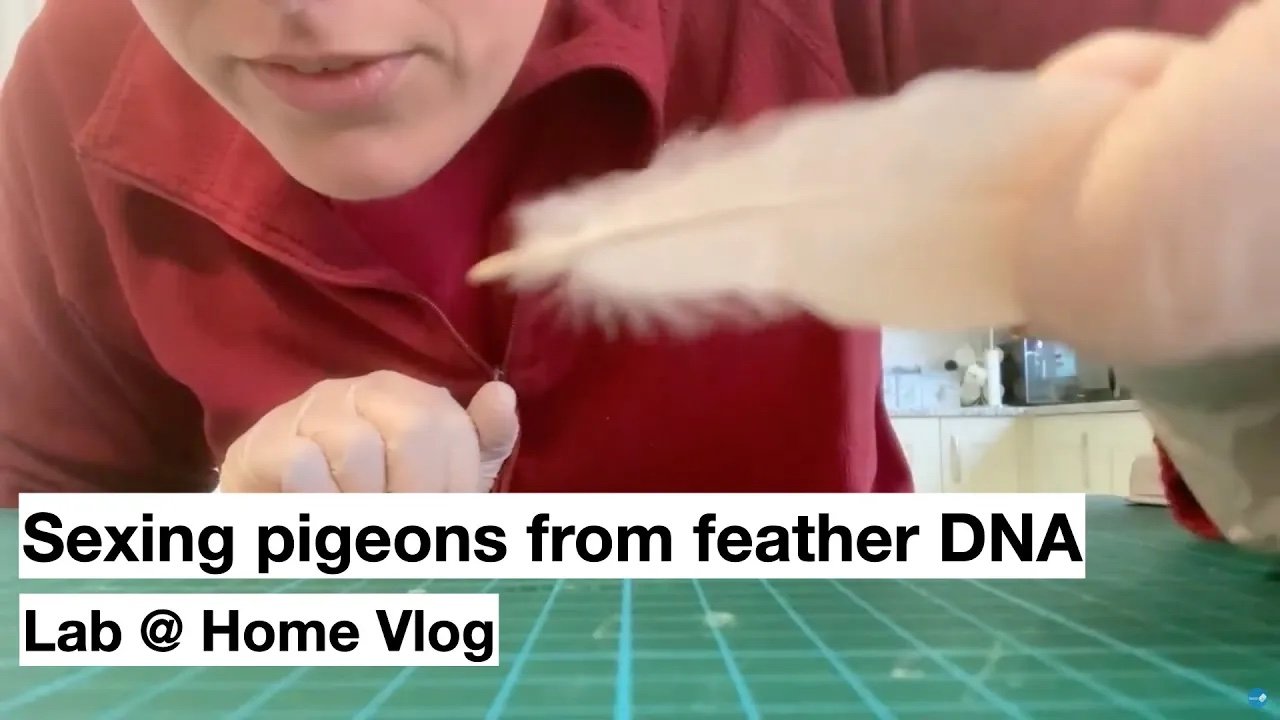
Check out this video with a demonstration of the bird sexing protocol by Dr Jennifer Shelton.
Bird sexing PCR workflows are increasingly used in:
- teaching environments
- outreach activities
- birding groups
- conservation workshops
- collaborative learning settings
Compact workflows can support shared-use environments where mentors, educators, or facilitators guide participants through practical molecular biology workflows.
Looking for advice on using Bento Lab?
Book a free consultation or ask a question.