£14.99–£16.59Price range: £14.99 through £16.59ex VAT
Animal / Metazoa DNA Barcoding Primers
LCO1490/HCO2198 Primers for DNA Barcoding
£14.99–£16.59Price range: £14.99 through £16.59ex VAT
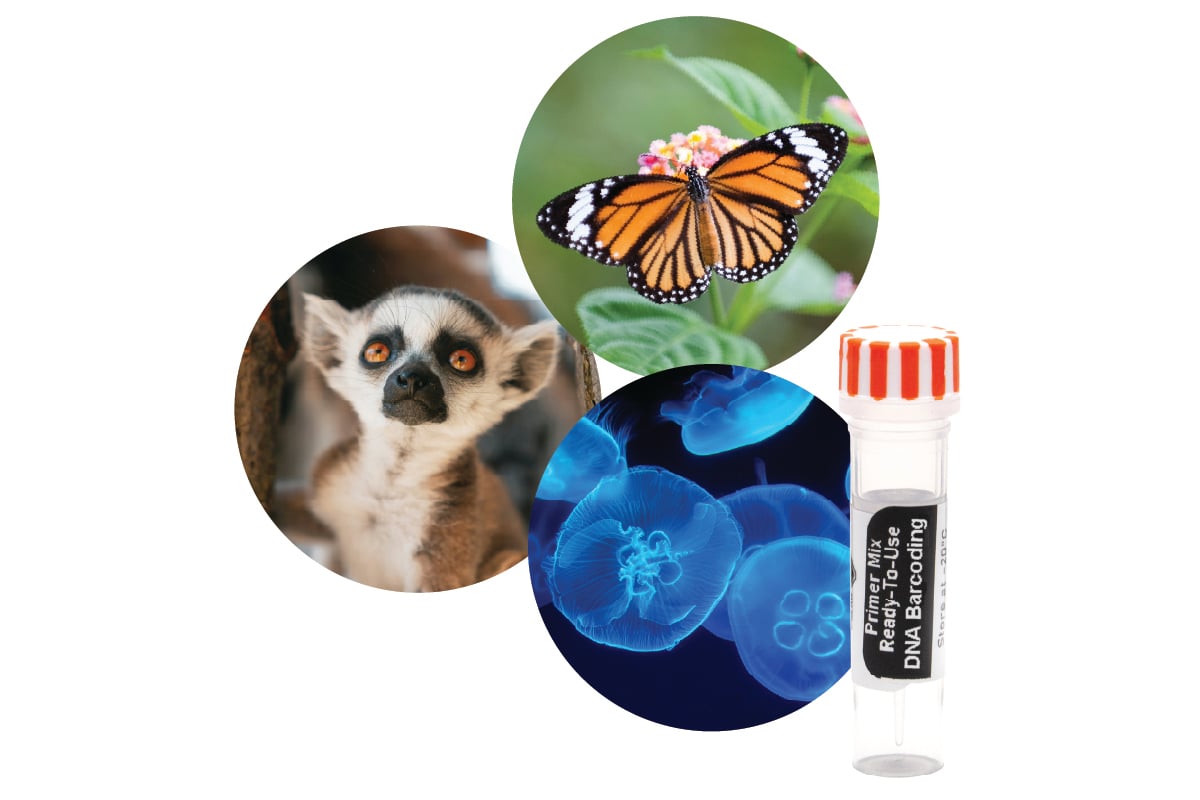
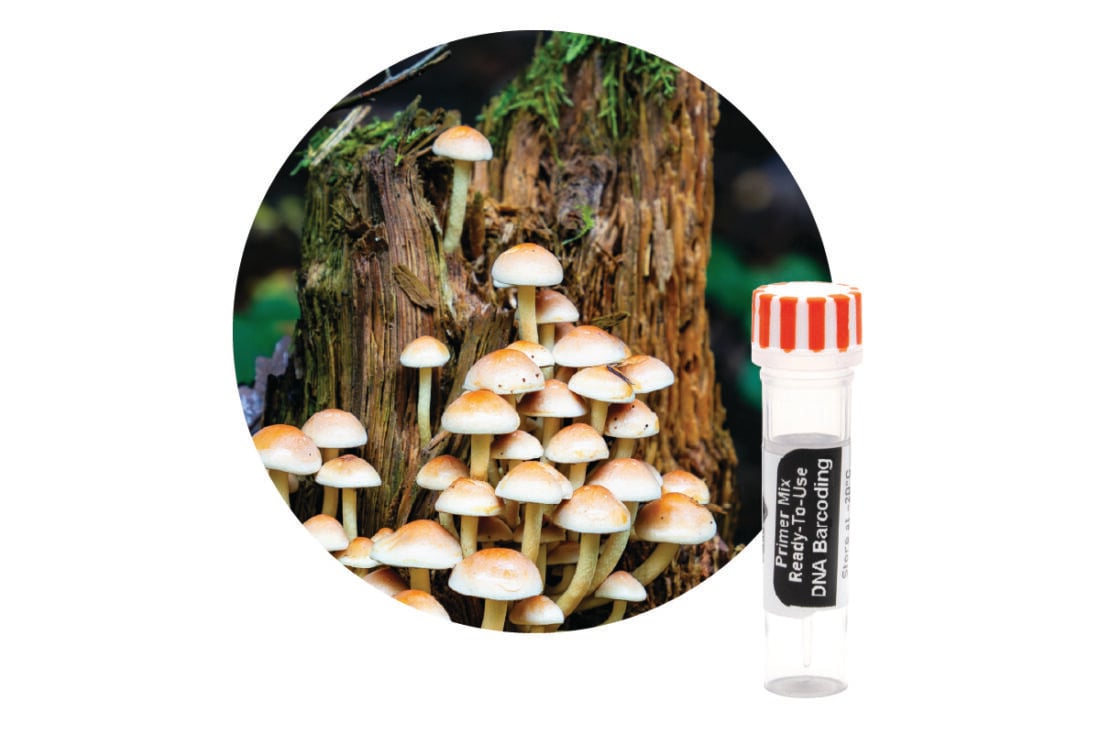
Use these Ready-to-Use primers to produce amplicons of DNA barcoding regions for animals / metazoa.
Choose between a beginner-friendly single-tube Primer Mix for PCR,
or a Primer Pair with forward and reverse primers in separate tubes for PCR and Sanger sequencing.
Animal DNA Barcoding Primers are short specific single-stranded DNA fragments (oligonucleotides) that define the region amplified during PCR during animal DNA barcoding workflows.
The primers amplify:
LCO1490/HCO2198: part of the cytochrome c oxidase subunit 1 mitochondrial gene (COI or cox1) in animals / metazoa
The primers come in two formats:
A beginner-friendly single-tube Primer Mix (400 µL) that contains forward and reverse primers for simple and convenient PCR setup
A Primer Pair containing forward and reverse primers in separate tubes (2 x 200 µL) for PCR and Sanger sequencing
Details
Primer Mixes
A single-tube format: Fewer tubes to track, and less pipetting.
Ready-To-Use: No need to rehydrate your primers — just add to your PCR mix (containing your master mix, water, and DNA template).
Convenient: Save on time and pipette tips with a premixed solution.
Easy: No need for dilution calculations with a 10X concentration — add 2 µL to a 20 µL reaction
Primer Pairs:
A two-tube format: Individual forward and reverse primer tubes.
Versatile: Use pairs of primers for PCR, and individual primers for forward and reverse Cycle Sequencing/Sanger Sequencing.
Ready-To-Use: No need to rehydrate your primers — just add to your PCR mix (containing your master mix, water, and DNA template).
Standard working concentration: Supplied at a concentration of 10 µM.
Use these primers to amplify the standard DNA barcoding region for animals: the cytochrome c oxidase subunit 1 mitochondrial gene (COI or cox1).
Individual primers in the Primer Pair set can also be used as forward or reverse primers for Sanger Sequencing.
FAQ
Do your animal/metazoan primer sets work with human DNA and other mammals? What species are they designed to amplify for metabarcoding experiments?
Our metabarcoding primer mix contains the classic “Folmer” primers LCO1490/HCO2198, which were designed to be universal for metazoa, based on sequences for:
Blue mussel — Mytilus edulis
Fruitfly — Drosophila yakuba
Honeybee — Apis mellifera
Mosquito — Anopheles gambiae
Brine shrimp — Artemia franciscana
Nematodes — Ascaris suum and Caenorhabditis elegans
They will be more or less universal for metazoa, although no primer set is 100% universal. These primers have been very widely used in the literature, so you can find example uses for most metazoan groups using a quick Google Scholar search for LCO1490/HCO2198 and the species/taxon group name.
For best results, you may need to adjust the annealing temperature for different taxon groups to get the best balance of specificity and amplification. The original protocol used an annealing temperature of 40 °C to maximise universality, but this is very low and you may want to use an annealing temperature around 50 °C or more for different taxa. We’d suggest consulting a few relevant studies in which these primers were used to help you decide on the best annealing temperature for your target species.
Specifications
Primer mixes are formulated as an 8 µM primer mix in low TE buffer (10 mM Tris-HCl pH 8, 0.1 mM EDTA), suitable for single-tube setups.
Primer pairs are formulated as 10 µM individual primer tubes in low TE buffer (10 mM Tris-HCl pH 8, 0.1 mM EDTA) suitable for batch PCR setups. Individual primers can also be used for forward or reverse sequencing by Sanger sequencing services.
Recommended Usage
Primer mixes:
Add 2 μL of primer mix per 20 µL PCR reaction to achieve a 0.8 µM final concentration. Add DNA template and PCR master mix as per the PCR protocol, and top the reaction up with PCR-grade water to a final volume of 20 µL.
Note: as little as 0.5 µM primer mix/rxn can be used if desired (to achieve a 0.2 µM final concentration), but this requires the use of a 2.5 uL pipette or a batch PCR mix approach as described for the primer pairs below.
Primer pairs:
Primers are typically used at between 0.1 µM to 1 µM final concentration. We recommend 0.2 µM for typical usage.
In a 20 µL PCR, use 0.4 µL of each primer per PCR to achieve a 0.2 µM final concentration.
Due to the small volumes of primers used per rxn, we suggest making batch PCR mixes (e.g. 5, 10, 20, 32 rxns) and aliquoting 20 µL of the complete PCR mix into PCR tubes before adding DNA template to each PCR, as shown in the table below.
An additional 10% volume of all components has been added to the PCR mix table below to compensate for any pipetting errors during aliquoting.
If you wish to alter the volume of primer used, or to use any PCR additives, add or subtract the additional volume from the volume of PCR-grade water as appropriate.
Components
1 rxn (µL)
5 rxn* (µL)
10 rxn* (µL)
20* (µL)
32* (µL)
PCR grade water
13.2
56
145
290.4
464.64
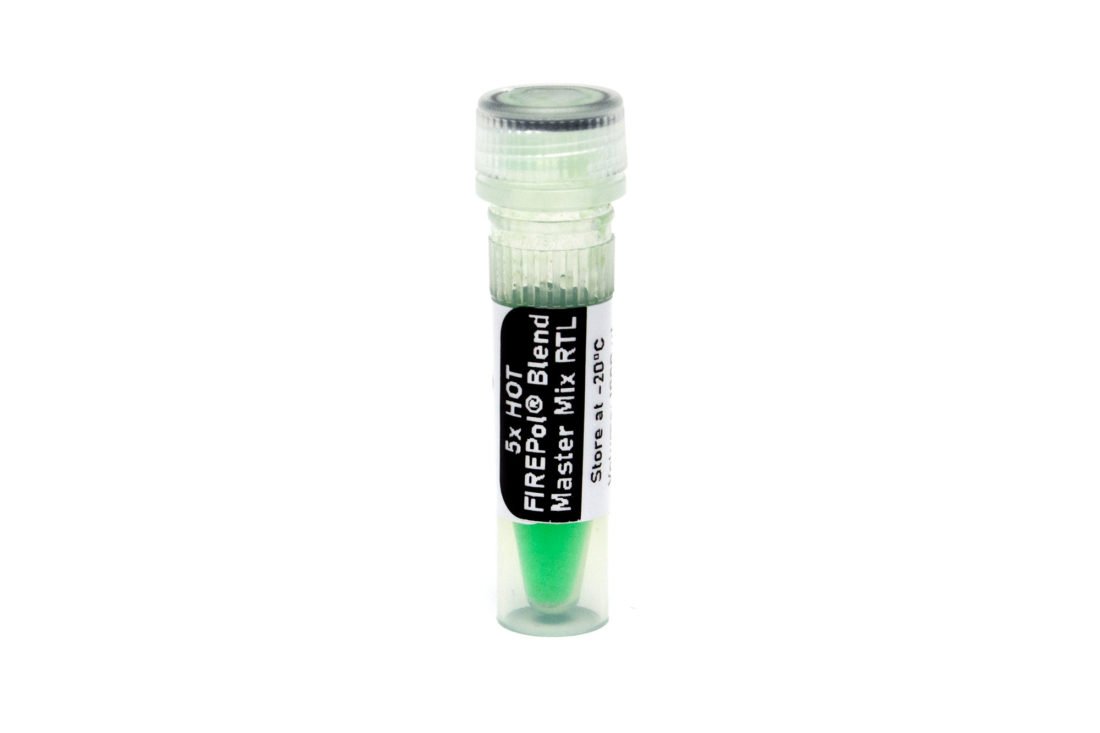
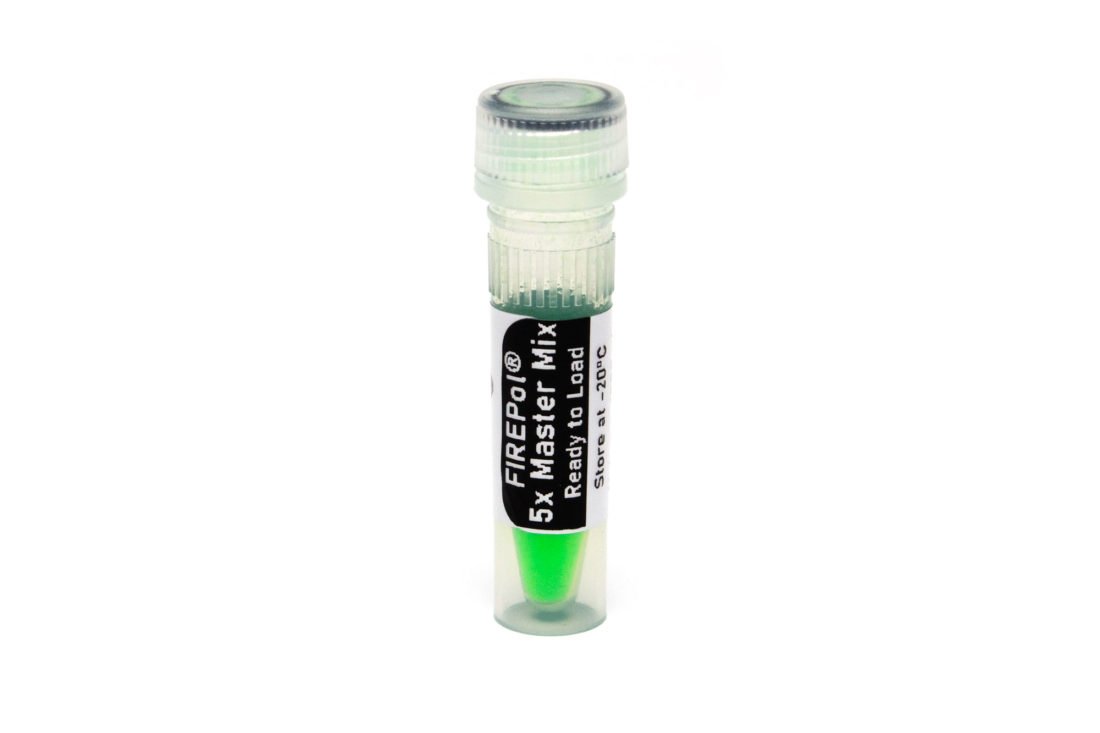
5x Mastermix
4
22
44
88
140.8
Forward primer
0.4
2.2
4.4
8.8
14.1
Reverse primer
0.4
2.2
4.4
8.8
14.1
DNA Template (total)
2
10
20
40
70.4
Final volume
20
100
200
400
640
Excess
0
10
20
40
70.4
*Volumes contain 10% extra reagents to compensate for any potential pipetting errors.
Primer Mixes: 10x stock solution: Mixed forward and reverse primers at 8 µM concentration, in low TE buffer (10 mM Tris-HCl pH 8, 0.1 mM EDTA)
Primer Pairs: Individual forward and reverse primers at 10 µM concentration, in low TE buffer (10 mM Tris-HCl pH 8, 0.1 mM EDTA).
Storage & Stability
Unopened primers should be stable at room temperature for several months. Opened primers can be refrigerated at 4 °C between uses, but should be frozen at -20 °C to extend shelf life.